
Description
Why pregnancy care at home matters in Mashhad
Pregnancy is one of the most sensitive and beautiful times in a woman’s life, accompanied by wide-ranging physiological, anatomical and psychological changes.
Alongside its joys, it brings many health challenges and concerns for mother and baby that need careful, regular monitoring. In a large city like Mashhad, with heavy traffic, seasonal air pollution, difficult journeys to medical centres and long waiting lists, attending surgeries and clinics can be very tiring and even risky for a pregnant woman, especially in a high-risk pregnancy.
Pregnancy care at home in Mashhad is a modern clinical solution that allows the mother to receive all the care, health and treatment services she needs from experienced midwives and nurses without leaving the safety and calm of her home.
These services not only remove the physical and emotional stress of travelling around the city but also greatly reduce exposure to infections in crowded hospitals and clinics.
Care at home allows the team to assess the mother’s health and surroundings more individually and adapt care plans to her lifestyle, diet and family circumstances. This approach makes regular monitoring of vital signs, careful assessment of the baby’s health and early detection of warning signs easier, and plays an important part in reducing maternal and newborn deaths and improving community health.
Goals of pregnancy care at home
The main goal of home care is to protect and improve the health of both mother and baby throughout this sensitive time. These goals work at preventive, treatment and supportive levels.
At the preventive level, the focus is on identifying biological and environmental risk factors that may disturb the normal course of pregnancy. Regular checks of blood pressure, weight, blood sugar and swelling make it possible to prevent serious complications such as pre-eclampsia and gestational diabetes, or to bring them under control early.
Another goal is to increase the knowledge and self-care of the mother and family. By teaching sound nutrition, healthy rest, safe physical activity and personal hygiene, the home-care team prepares the mother for the changes in her body.
Emotional support for the mother and reducing anxiety about birth and the baby’s health are also key goals. Regular visits by a specialist at home create a deep sense of security and peace of mind, which in turn supports a healthy pregnancy.
Who needs specialist pregnancy care at home?
Although every pregnant woman can benefit from home care, some have an urgent need because of particular medical or obstetric conditions:
High-risk pregnancies: including women with pre-existing diabetes, chronic high blood pressure, heart disease, kidney disorders, autoimmune diseases such as lupus, or epilepsy. Pregnancy over 35 or under 18 also falls into this group.
A history of complications in previous pregnancies: women with recurrent miscarriage, preterm birth, placental abruption, placenta praevia, severe pre-eclampsia or stillbirth (IUFD) need closer monitoring, which is easier at home.
Multiple pregnancies: twins or more put extra strain on the mother’s body and increase the risk of preterm birth and placental insufficiency. These mothers often need partial or complete rest from mid-pregnancy.
Mothers on bed rest: in situations such as a short cervix, threatened preterm labour, vaginal bleeding or premature rupture of the membranes, the doctor may prescribe strict bed rest. For these mothers even one trip out of the house for a test or examination can be risky, so all care should be provided at the bedside.
Severe pregnancy sickness (hyperemesis gravidarum): severe nausea and vomiting leading to weight loss, dehydration and electrolyte disturbance may need IV fluids and anti-sickness injections at home.
Initial assessment and full history of the pregnant mother
At the first home visit, the midwife takes a full, careful history, including personal details, previous pregnancies (number of pregnancies, births and miscarriages, type of previous births and babies’ birth weights), family and genetic history, drug and food allergies, and current medicines and supplements. Gestational age is calculated from the first day of the last menstrual period (LMP) and checked against first-trimester ultrasound scans.
A full physical assessment follows, including blood pressure, pulse, breathing rate and temperature.
Changes in blood pressure in pregnancy are very important, and it should be measured with the correct technique, sitting or reclining on the left side. Height and weight are measured and body mass index (BMI) calculated to set the recommended weight gain. The midwife also examines the limbs for swelling (oedema) and varicose veins, checks the thyroid and examines the breasts for physiological changes and readiness for breastfeeding.
Regular monitoring of the mother’s vital signs and health indicators
A pregnant woman’s vital signs reflect her circulation and her baby’s health. Regular monitoring at home visits prevents medical crises from taking the family by surprise:
Blood pressure: a reading of 140/90 mmHg or more, especially after 20 weeks, is a serious warning sign of pre-eclampsia. A calibrated monitor is used at home and, if needed, the partner or carer is taught to measure it daily.
Pulse and breathing: the increase in blood volume in pregnancy naturally raises the mother’s heart rate (by about 10–15 beats a minute), but a very fast heart rate or breathlessness at rest may indicate severe anaemia, heart problems or pulmonary embolism and needs urgent assessment.
Temperature: fever in pregnancy may be a sign of urinary, uterine or systemic infection, and monitoring it is essential to protect the baby and prevent preterm labour.
Weight: a sudden gain (more than 1 kg in a week) is usually caused by fluid retention (oedema), one of the early signs of pre-eclampsia.
Checking the baby’s health at home with portable equipment
Assessing the baby’s well-being is an essential and exciting part of midwifery care at home. Using modern tools and techniques, the midwife obtains detailed information about the baby in the womb:
Listening to the fetal heart rate (FHR): with a portable handheld Doppler, the baby’s heartbeat can be heard from about 12 weeks. The midwife counts the beats per minute and listens to the rhythm (normally 110–160 beats a minute). Changes or drops in the baby’s heart rate may indicate fetal distress or lack of oxygen (hypoxia).
Measuring fundal height: from 20 weeks, the midwife measures the distance from the pubic bone to the top of the womb (fundus) with a tape measure. In centimetres this usually matches the number of weeks of pregnancy; a larger or smaller measurement may suggest twins, too much amniotic fluid (polyhydramnios), too little fluid (oligohydramnios) or fetal growth restriction (IUGR).
Leopold’s manoeuvres: by feeling the mother’s abdomen in the third trimester, the midwife assesses the baby’s position (head down, breech or transverse), where the baby’s back lies and how far the head has descended into the pelvis.
Teaching fetal movement monitoring: the mother learns how to count the baby’s movements after meals, lying on her left side. Reduced movements are one of the first signs that the baby may be in difficulty.
Managing high blood pressure in pregnancy and preventing pre-eclampsia
High blood pressure disorders in pregnancy are a major cause of serious complications for mother and baby. Pre-eclampsia is a multi-system syndrome marked by high blood pressure and protein in the urine (proteinuria).
At home visits the midwife looks for its clinical signs: severe headaches that do not respond to painkillers, blurred vision, seeing flashing lights, pain under the breastbone (epigastric pain, a sign of stretching of the liver capsule), sudden swelling of the hands and face, and reduced urine.
Home care for this condition includes regular blood pressure checks, rapid urine dipstick tests for protein, teaching the mother to take prescribed blood pressure medicines (such as methyldopa or labetalol) correctly, and a low-salt diet.
The midwife also teaches the family to watch for danger signs so that they contact the doctor or go to hospital immediately if any appear. In mild pre-eclampsia, daily monitoring at home may avoid the need for a long hospital stay.
Screening, monitoring and managing gestational diabetes at home
Gestational diabetes (GDM) is any degree of glucose intolerance first diagnosed during pregnancy. It is usually screened for between 24 and 28 weeks with a glucose tolerance test. Poorly controlled gestational diabetes can cause macrosomia (a very large baby and a difficult birth), low blood sugar in the newborn, a higher risk of pre-eclampsia and a higher chance of caesarean birth.
The home-care nurse or midwife plays a key role. This includes teaching the mother to use a glucose meter and record fasting blood sugar and readings two hours after meals. With a dietitian, the midwife designs a suitable diet that replaces simple sugars with complex carbohydrates.
If insulin is needed, the midwife teaches how to draw up and inject insulin into the fat under the skin, suitable injection sites and how to store insulin. The signs of low blood sugar (hypoglycaemia), such as shaking, cold sweats, palpitations and weakness, and what to do immediately, are also fully explained.
Laboratory sampling and injections at home
One of the greatest conveniences of home care is having blood tests and injections without leaving home. During pregnancy, many routine tests are needed, including a full blood count (CBC) for anaemia, urine tests and cultures for silent infections, diabetes screening and clotting tests.
The centre’s nurse takes blood and urine samples at home under fully sterile conditions and with a proper cold chain, delivers them promptly to reputable laboratories in Mashhad and follows up the results.
Injections in pregnancy need special care. Progesterone injections to help prevent miscarriage or preterm birth, enoxaparin or heparin for mothers with clotting disorders (thrombophilia), anti-D immunoglobulin for Rh-negative mothers with an Rh-positive partner at 28 weeks or after any bleeding, and corticosteroid injections (betamethasone) to mature the baby’s lungs when preterm birth is likely are all given at home by our staff following injection safety protocols.
Managing medicines and supplements in pregnancy
Taking medicines without advice in pregnancy is strictly discouraged because many medicines cross the placenta and may harm the baby (teratogenicity). The home-care midwife monitors and teaches the mother about her medicines. Medicines have traditionally been classified by risk (the former FDA categories A to X), and the midwife makes sure the mother takes only the medicines prescribed by her doctor.
Besides treatment, regular pregnancy supplements are essential for the baby’s growth:
Folic acid: taken from before pregnancy to the end of the first trimester, it is vital to prevent neural tube defects (NTDs).
Iron: prescribed from about 16 weeks to prevent and treat iron-deficiency anaemia, which is common in pregnancy because plasma volume increases. The midwife explains how to take it (with vitamin C to improve absorption, and not at the same time as dairy products or tea).
Multivitamins and calcium: to meet the baby’s needs for bone growth and protect the mother’s bone density. The midwife explains ways to reduce side effects such as constipation and nausea.
Evidence-based nutrition for the pregnant mother
The mother’s diet directly affects the baby’s weight gain, the prevention of complications and the mother’s energy. By assessing the mother’s eating habits, the home-care midwife draws up a balanced meal plan based on her increased needs for calories and protein. In the first trimester extra calories are hardly needed, but in the second and third trimesters needs rise by about 340 and 450 kcal a day respectively.
The diet should include enough macronutrients (protein to build the baby’s tissues and the placenta, complex carbohydrates for energy and healthy fats containing omega-3 for the baby’s brain and retina) and micronutrients.
The midwife emphasises daily fresh vegetables, fruit, whole grains, pasteurised dairy and lean protein such as chicken, fish and pulses, and advises avoiding risky foods such as undercooked meat and eggs (risk of toxoplasmosis and salmonella), unpasteurised dairy (risk of listeria), high-mercury fish (such as shark) and too much caffeine.
Specialist exercise, posture and Kegel exercises at home
Regular light physical activity in an uncomplicated pregnancy improves circulation, reduces muscle and joint pain, lifts mood and helps the birth.
The midwife teaches safe exercises suited to the stage of pregnancy, such as light walking, gentle stretching and pregnancy yoga. Correct posture when standing, sitting and lying is taught to reduce the increased curve of the lower back and prevent back pain; for example, lying on the left side with a pillow between the knees is the best position for blood flow to the placenta.
One of the most important exercises taught is Kegel exercises (pelvic floor strengthening).
Regular contraction and relaxation of these muscles helps prevent urinary incontinence during pregnancy and after birth and supports good pelvic floor control during labour. The midwife shows in practice how to find these muscles and exercise them without tightening the abdominal and thigh muscles.
Managing common pregnancy discomforts (nausea, constipation, heartburn and varicose veins)
Physiological discomforts of pregnancy are usually not dangerous but can greatly reduce the mother’s quality of life. The home-care team offers practical, evidence-based solutions:
Morning sickness: eating a dry biscuit or toast before getting out of bed, small frequent meals, avoiding fatty and spicy foods, and ginger as a natural remedy for nausea.
Constipation: caused by increased progesterone and slower bowel movement. Solutions include more fibre, drinking enough water (at least 8 glasses a day) and gentle daily walks.
Heartburn (reflux): caused by relaxation of the lower oesophageal sphincter. Solutions include not lying down straight after meals, raising the head of the bed and not drinking large amounts with meals.
Varicose veins and swollen legs: avoiding long periods of standing, raising the legs above heart level when resting, and using pregnancy compression stockings if needed.
Warning signs and emergencies in pregnancy
One of the most vital tasks of the home-care team is to help the mother and family recognise danger signs quickly. Delay in reaching medical care in an emergency can have irreversible consequences. Signs that need an immediate call to the midwife or going straight to a hospital emergency department include:
any vaginal bleeding or spotting;
reduced or absent fetal movements (especially after 24 weeks);
a sudden gush or continuous trickle of clear fluid from the vagina (suspected rupture of the membranes);
severe, continuous abdominal pain or regular uterine cramps (signs of preterm labour or placental abruption);
fever and chills;
severe headache, blurred or double vision, or sudden swelling of the hands and face (signs of pre-eclampsia);
severe breathlessness or chest pain;
burning or pain when passing urine (a sign of active urinary infection).
Preparing for a natural birth and reducing fear of labour pain
Fear of childbirth (tokophobia) is a major reason for unnecessary caesarean sections. Through counselling and teaching modern techniques, the midwife at home helps reduce this anxiety. Learning how labour works and its stages helps the mother know what is happening in her body at each stage and how to work with her contractions.
Non-drug pain relief techniques practised at home include breathing techniques for the different phases of labour, relaxation methods, local massage (especially perineal massage to help prevent tearing at birth) and local heat or cold. With her husband present, the midwife explains his role as an active birth partner and practises supportive techniques with him, so that the birth can be a safe and positive experience.
Successful breastfeeding and breast care at home
Breast milk is the gold standard for feeding newborns, but a successful start needs learning and practice during pregnancy. The midwife examines the breasts and, if the nipples are flat or inverted, teaches special corrective techniques (such as the Hoffman manoeuvre).
Mothers learn how to hold the baby correctly (positions such as cradle, underarm and side-lying) and how to help the baby take the areola into the mouth to prevent sore and cracked nipples. The signs and management of common breastfeeding problems such as engorgement, blocked ducts and mastitis are explained in full. The midwife stresses the importance of exclusive breastfeeding for the first six months and how to express and store milk correctly for times when the mother is away.
Mental health, managing anxiety and preventing depression in pregnancy
Large hormonal changes in pregnancy, together with worries about the future and new responsibilities, make pregnant women vulnerable to emotional difficulties. Untreated depression and anxiety in pregnancy can lead to poor fetal growth, preterm birth and a higher risk of postnatal depression.
By regularly assessing the mother’s mood with standard scales, the home-care midwife provides a supportive space to talk about fears and worries. Teaching stress management, deep breathing, encouraging relaxing hobbies and improving sleep are part of this care. If signs of severe depression or thoughts of self-harm appear, the midwife arranges specialist consultation with the centre’s psychiatrist or clinical psychologist.
The family’s role and involving the husband in pregnancy
Pregnancy is a family experience, and the husband’s emotional and practical support plays a vital role in the mother’s physical and mental health. The home-care midwife tries to involve him actively in care sessions.
The husband learns about the mother’s normal mood changes caused by hormones, how to help with household tasks to reduce her physical load, and how to massage her back and shoulders to ease muscle pain. He also learns how to recognise pregnancy danger signs and act as the family’s crisis manager in an emergency. This involvement strengthens the couple’s bond and prepares them to welcome the baby as a team.
Limits of home care and criteria for hospital transfer
Despite its many benefits, there are situations in which monitoring at home is no longer safe and the mother must be transferred to hospital quickly. The home-care team knows these limits well. Transfer criteria include:
onset of active labour (regular contractions, preterm or at term);
clear or suspected rupture of the membranes, which increases the risk of infection inside the womb (chorioamnionitis);
severe pre-eclampsia or signs of HELLP syndrome (breakdown of red blood cells, raised liver enzymes and low platelets);
active vaginal bleeding (suspected abruption or placenta praevia);
severe, persistent changes in the baby’s heart rate pattern (fetal distress) found on listening;
acute medical illness in the mother, such as appendicitis, bowel obstruction or deep vein thrombosis (DVT), that needs surgery or intensive care.
Equipment used by the midwife at home
High-quality care at home needs specialist portable tools. The midwife from Tose Salamat centre in Mashhad visits with the following equipment:
a handheld fetal Doppler for listening to the baby’s heartbeat;
calibrated, high-quality upper-arm blood pressure monitors;
accurate portable scales for the mother’s weight;
urine dipsticks for immediate checking of protein and glucose;
sterile blood sampling kits and special containers for transporting samples;
a midwifery first-aid kit with emergency medicines and injection supplies;
obstetric tape measures and measuring tools;
leaflets and visual teaching aids for birth and breastfeeding techniques.
How the family can prepare before the visit
To get the most from the service, the family should prepare the following before the midwife arrives:
a quiet, clean, well-lit room or space for examinations and teaching;
all previous medical records, scans, test results and the mother’s health booklet;
comfortable, loose clothing for the mother to make abdominal and blood pressure checks easier;
the husband or main carer present during the visit for shared teaching;
handwashing and basic hygiene before the examination;
a comfortable chair or suitable bed for the mother to rest during monitoring.
Frequently asked questions about pregnancy care at home in Mashhad
Can home care completely replace visits to a specialist doctor?
No. Home care complements visits to the obstetrician. The care team works under the treating doctor’s protocols and reports to them regularly.
How often does a midwife need to visit?
It depends on the pregnancy. In a normal pregnancy one or two visits a month may be enough, but in high-risk pregnancies or on bed rest, weekly or several visits a week may be needed.
Can genetic screening tests be done at home?
Yes. Blood samples for first- and second-trimester screening are taken at home and sent to the laboratory, but for anomaly scans the mother needs to visit an imaging centre.
What should I do if I have abdominal pain in the middle of the night?
Tose Salamat centre in Mashhad has 24-hour telephone support. If any warning sign appears, you can call for advice or for a midwife to be sent. For severe pain, bleeding or leaking fluid, go straight to the nearest hospital emergency department.
Is an anti-D (RhoGAM) injection at home safe?
Yes. After careful review of the indirect Coombs test, the anti-D injection is given at home by a midwife, keeping the medicine in a proper cold chain and monitoring for possible reactions.
How can leg cramps in pregnancy be prevented?
Cramps are often linked to low calcium or magnesium and pressure on the leg nerves. Gentle massage, taking prescribed supplements and stretching the ankles before bed help.
Is a pregnancy support belt recommended?
If there is severe back pain or weak abdominal muscles, a standard pregnancy belt that supports the lower abdomen can be helpful, with the midwife’s approval.
What causes swollen hands in pregnancy, and is it dangerous?
Mild swelling of the feet late in the day is normal, but swelling of the hands and face, especially in the morning, may be a sign of fluid retention and pre-eclampsia and needs prompt blood pressure checks.
Are pregnancy vaccinations given at home?
Yes. Vaccines approved in pregnancy, such as tetanus–diphtheria (Td) and the flu vaccine in the cold season, can be given at home in line with national guidelines.
When should I go to hospital to give birth?
Regular contractions (every 5 to 10 minutes), a sudden gush of fluid or vaginal bleeding are signs that you need to go to hospital.
Are internal (cervical) examinations done at home?
Not normally. Internal examinations are done only in special cases, on the doctor’s direct instruction and under sterile conditions, to avoid infection or triggering preterm labour.
Are herbal teas allowed in pregnancy?
Herbal teas (such as borage, thyme or pennyroyal) should not be taken without medical advice, because some can stimulate contractions and increase the risk of miscarriage or preterm birth.
What is the role of occupational therapy in pregnancy care?
An occupational therapist assesses the ergonomics of the mother’s home and teaches ways to adapt daily activities (ADLs) to reduce strain on the spine and joints.
Does blood sugar monitoring in gestational diabetes need a long fast?
No. For daily tests, an 8-hour fast is needed only for the fasting reading (FBS), and post-meal readings are taken exactly 2 hours after the first bite of the meal.
How can I tell false labour from real labour?
Real labour pains do not ease with rest or changing position; they become more regular, stronger and closer together over time and are often accompanied by a mucus “show”.
Can a fetal non-stress test (NST) be done at home?
Yes. If closer monitoring of the baby’s heart rate and contractions is needed, a midwife can be sent with a portable NST machine.
Is bathing in hot water allowed in pregnancy?
No. Very hot baths or hot tubs raise the mother’s core temperature (hyperthermia) and can increase the risk of birth defects, especially in the first trimester.
What causes sudden palpitations in pregnancy?
The increase in blood volume makes the heart work harder, which is sometimes felt as mild palpitations, but if they come with breathlessness or dizziness they should be checked.
Are zinc supplements necessary in pregnancy?
Zinc is important for the baby’s cell growth, but prenatal multivitamins usually contain enough, and a separate supplement is not needed without a doctor’s advice.
How do I arrange pregnancy care at home in Mashhad?
Simply call Tose Salamat clinical care centre, and our staff will arrange your first assessment visit.
Specialist services of Tose Salamat clinical care centre
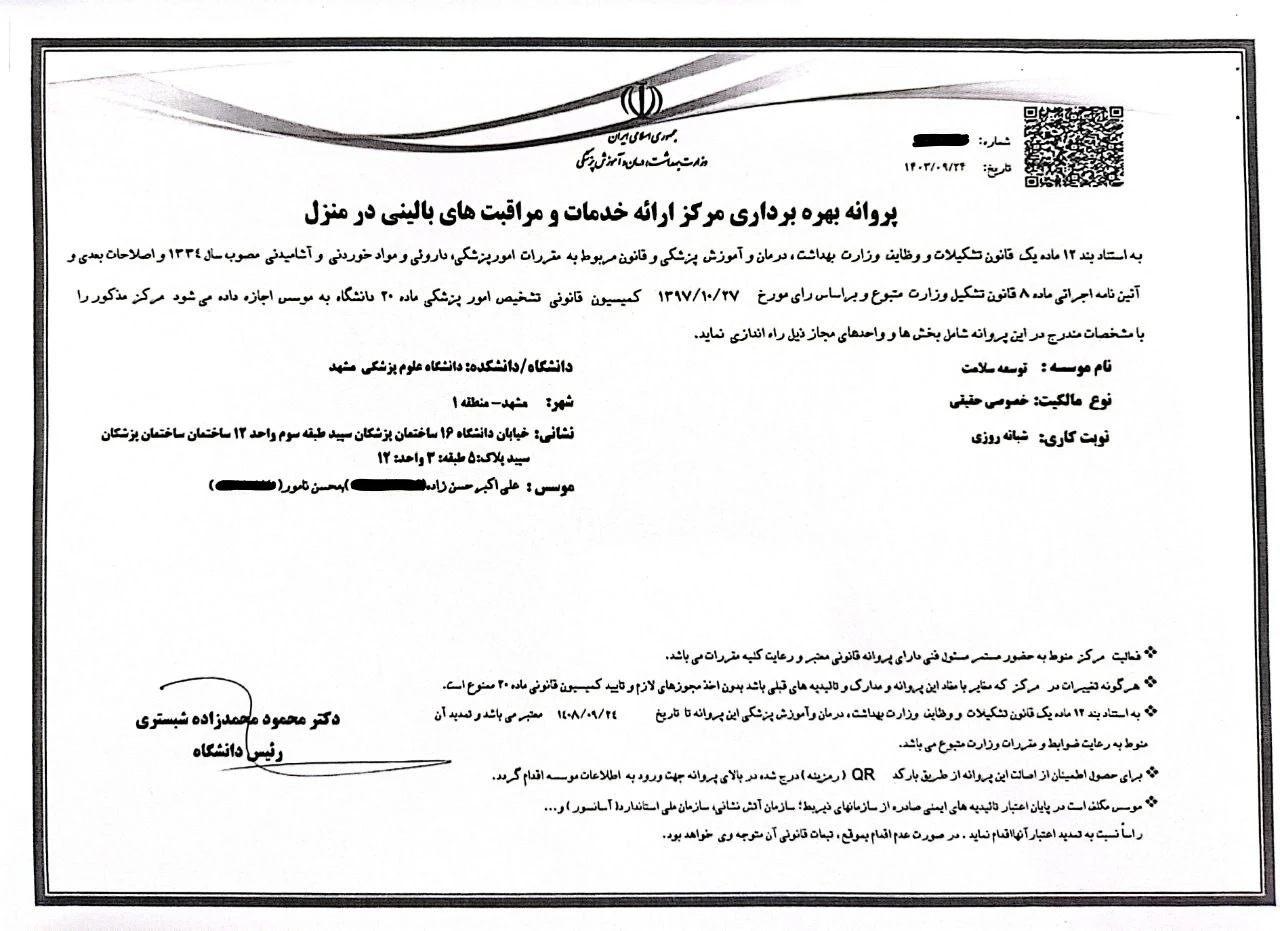
Tose Salamat clinical care centre in Mashhad, with senior midwives and experienced nurses, provides comprehensive, specialist pregnancy care at home. Services include monitoring of vital signs, checking the baby’s heartbeat, laboratory tests and injections at home, management of gestational diabetes and high blood pressure, and education sessions to prepare for birth and breastfeeding. Our aim is to provide a safe, evidence-based and stress-free setting so that mothers pass through this sensitive time in good health.
To arrange pregnancy care at home in Mashhad, call +98 930 900 9159.