
Description
A nurse for your hospitalised patient in Mashhad
A hospital stay usually brings worry, stress and many questions for both the patient and the family. The hospital team is responsible for diagnosis, treatment and medical care, but many patients need extra help with daily activities, moving, eating, staying calm and keeping in touch with the people around them. In these situations an informed companion or private nurse can make the stay much easier for the patient and the family.
Patients such as older people, stroke patients, people recovering from surgery, people with limited mobility and those with chronic conditions usually benefit most from a trained companion. Besides emotional support, a companion can play an important role in personal care, keeping the family informed, working with the care team and keeping the patient safe.
In this article you will learn about a patient companion’s duties, the difference between a carer and a nurse, the benefits and limits of the service, safety tips and everything families should know about caring for a patient in hospital.
What is patient care in hospital?
Patient care in hospital means the supportive, caregiving and, in some cases, nursing services provided alongside the hospital’s own services to improve the patient’s comfort, safety and quality of care.
These services do not replace the work of the hospital’s doctors and nurses; they complement it and focus on the patient’s everyday needs.
Why do some patients need a companion?
Not every patient is in the same situation.
A young person admitted for minor surgery may be able to do most things for themselves within a few hours.
But an older person with a hip fracture, or a patient who has had a stroke, may need help even to drink a glass of water.
In such cases a companion becomes very important.
A patient companion’s main duties
Depending on the patient’s condition, a companion can help with the following.
Emotional support
Fear of the illness, the hospital environment and worry about the future make many patients anxious.
Having a trusted person at the bedside can:
- reduce anxiety;
- create a sense of security;
- improve the patient’s cooperation with treatment;
- strengthen the patient’s motivation to continue treatment.
Help with eating
Some patients cannot eat on their own.
A companion can:
- help the patient sit up;
- give food as advised by the care team;
- keep an eye on how much the patient eats and drinks;
- tell the nurse if they notice any swallowing problem.
Help with moving
Unsafe moving is one of the main reasons hospitalised patients fall.
A trained companion can:
- help the patient get up;
- stay beside the patient while walking;
- push the wheelchair correctly;
- transfer the patient safely from bed to chair.
Personal hygiene
Patients who cannot manage personal tasks may need help with:
- washing hands and face
- brushing teeth
- combing hair
- changing clothes
- tidying the bed
Keeping the family informed
Family members are often unable to stay at the hospital all the time.
A companion can:
- update them on the patient’s general condition;
- pass on the patient’s needs;
- let the family know about important changes.
Patient companion, carer and nurse: what is the difference?
One of the most common mistakes is to treat these three roles as the same.
Patient companion
A companion mainly provides support and help with everyday matters.
Carer
Besides keeping the patient company, a carer helps with personal activities such as eating, bathing, moving and cleanliness.
Nurse
A nurse holds a university degree in nursing and, according to the patient’s condition and the doctor’s orders, can provide specialised services such as:
- monitoring vital signs
- injections
- wound care
- changing dressings
- catheter care
- educating the patient and family
Which patients need a companion most?
Older people
Older people may struggle with daily tasks because of muscle weakness, memory problems or chronic illness.
Stroke patients
These patients usually need help to walk, eat, change position and manage personal care.
Orthopaedic patients
People with fractures or joint replacement surgery usually have limited mobility.
Patients with Alzheimer’s disease
These patients may not recognise the time, place or people well, and a companion reduces the risk of unsafe behaviour.
Cancer patients
Patients having chemotherapy or major surgery usually need more emotional support as well as physical care.
Long-stay patients
The longer a hospital stay lasts, the higher the risk of muscle weakness, pressure sores and emotional problems, and the more important the companion’s role becomes.
Benefits of having a patient companion
Studies have shown that involving family and carers can improve the patient’s experience of a hospital stay. A trained companion can strengthen communication between the patient, the family and the care team through accurate updates, emotional support and help with daily activities.
The main benefits include:
- less anxiety and loneliness for the patient
- help in staying calm
- help with daily activities
- a greater sense of security
- less emotional strain on the family
- better flow of information between patient and family
- more effective cooperation with the care team
Does every patient need a companion?
No.
The need for a companion depends on several factors:
- the patient’s age
- how severe the illness is
- level of consciousness
- ability to move
- ability to manage personal care
- the doctor’s opinion
- hospital rules
Some patients stay only a few hours and do not need a permanent companion, while for others a trained carer can be very helpful.
Caring for a patient after surgery in hospital
The period after surgery is one of the most sensitive stages of treatment. Because of pain, the effects of anaesthesia, limited mobility or general weakness, the patient may not be able to do many everyday things alone.
A trained companion working alongside the care team can make the patient more comfortable.
A companion’s main tasks during this time include:
- helping the patient change position, in coordination with the nurse
- staying with the patient during their first walk after surgery (if the doctor allows)
- helping with eating
- keeping track of fluid intake
- reporting any unusual pain or bleeding to the nurse
- giving emotional support
The patient should not get out of bed without the doctor’s or nurse’s permission, because in the first hours after surgery there is a risk of dizziness, low blood pressure or falling.
Caring for older people in hospital
Older people are more vulnerable than younger patients.
Reduced muscle strength, poor eyesight, hearing loss, underlying conditions and taking several medicines at once can make a hospital stay harder for them.
When caring for older people, pay attention to the following:
Preventing falls
Falls are one of the most important complications of a hospital stay in older people.
To reduce the risk:
- keep the patient’s path clear;
- give support while walking;
- use suitable footwear;
- if the patient feels dizzy, they should not walk alone;
- keep the nurse call button within reach.
Preventing confusion in older patients
Some older people become confused or have temporary changes in alertness while in hospital.
To reduce the chance of this:
- keep a clock and calendar where the patient can see them;
- make sure the room is suitably lit;
- make sure the patient uses their glasses or hearing aid;
- family members should speak to the patient calmly;
- protect the patient’s night-time sleep as much as possible.
Staying active
Long periods of bed rest weaken the muscles.
If the doctor allows:
- the patient should sit up several times a day;
- move their legs;
- do simple exercises;
- spend less time inactive in bed.
Patient care in ICU and CCU
Intensive care units are for patients who need close monitoring and specialised treatment.
Although most care in these units is provided by nurses and doctors, the presence of family and a companion can matter emotionally, depending on hospital rules and the patient’s condition.
In this situation a companion should:
- stay calm;
- follow the care team’s advice;
- avoid entering the unit unnecessarily;
- get the necessary information from the attending doctor;
- not pass incorrect or stressful news on to the patient.
Caring for a stroke patient
Stroke patients may face problems such as:
- weakness in the limbs
- speech difficulties
- swallowing problems
- poor balance
- reduced alertness
A companion can:
- stay with the patient while they eat;
- make sure the patient sits correctly;
- learn the exercises prescribed by the physiotherapist;
- use the correct technique when moving the patient;
- report any sudden change in the patient’s condition to the nurse straight away.
Caring for a cancer patient
Cancer patients may need more support because of surgery, chemotherapy or general weakness.
Important points include:
- attention to nutrition
- preventing dehydration
- personal hygiene
- emotional support
- help with walking
- watching for signs of infection such as fever
Nutrition for hospitalised patients
Proper nutrition is part of treatment.
A companion should:
- give the patient only the prescribed diet;
- not give food outside the plan without checking with the care team;
- report loss of appetite or nausea;
- follow up fluid intake as the doctor advises.
For some patients, such as people with diabetes, kidney disease or swallowing problems, following the diet is even more important.
Preventing bedsores
Patients who stay in bed for long periods are at risk of pressure sores.
To reduce the risk:
- change the patient’s position as the care team advises;
- check the skin every day;
- keep the sheets smooth and dry;
- avoid dragging the patient across the bed;
- pay attention to good nutrition and enough protein.
If you notice persistent redness or a sore, tell the nurse immediately.
Preventing blood clots
Long periods without movement can increase the risk of blood clots in the legs.
If the doctor allows, the following can help:
- moving the legs
- simple exercises
- gradual walking
- compression (anti-embolism) stockings if prescribed
Managing pain
Uncontrolled pain reduces mobility, disturbs sleep and slows recovery.
A companion should:
- ask the patient how bad the pain is;
- report the pain to the nurse;
- never give medicines on their own initiative;
- reassure the patient that the pain can be controlled.
Communicating well with the care team
One of a companion’s most important tasks is respectful, accurate communication with doctors and nurses.
To do this:
- write down important questions;
- pass on medical information accurately;
- report changes in the patient’s condition;
- avoid relying on unreliable sources of information.
Common mistakes made by companions
Some behaviour, however well meant, can disrupt treatment:
- insisting on things the doctor has forbidden;
- bringing unsuitable food for the patient;
- stopping or changing medicines without consulting the team;
- moving the patient without a nurse’s help;
- hiding new symptoms from the care team;
- crowding the room with too many visitors;
- passing anxiety and bad news on to the patient.
Common myths
“The longer the patient stays in bed, the sooner they will recover.”
No. For many patients, early and controlled movement (with the doctor’s approval) reduces complications and speeds recovery.
“A companion can adjust the medicines themselves.”
No. Any change to medicines must be made only on the advice of a doctor or nurse.
“If the patient is not in pain, no more care is needed.”
No. Even without pain, attention to nutrition, mobility, skin, mood and preventing complications is still essential.
“A companion replaces the care team.”
No. A companion has a supporting role and never replaces the hospital’s doctors or nurses. The best results come when the companion, the family and the care team work together.
Checklist before a hospital admission
Being prepared before admission can prevent many problems and unnecessary stress. The family should check:
✅ ID documents and health insurance card
✅ test results, imaging and previous medical records
✅ a list of the patient’s medicines with doses and times
✅ informing the care team about any drug or food allergies
✅ comfortable clothes, suitable slippers and personal hygiene items (if needed)
✅ phone charger and the patient’s essential items (if allowed)
✅ the phone number of a family member for the hospital to contact
Daily checklist for a companion
If you are staying with a patient as their companion, this checklist can help:
☐ make sure medicines are taken according to the care team’s schedule
☐ check the patient’s general condition (alertness, skin colour, breathing)
☐ help with eating and drinking, if allowed
☐ help with changing position or walking only in coordination with the staff
☐ clean your hands before and after touching the patient
☐ report any unusual change to the nurse
☐ create a calm, supportive environment for the patient
Signs to report to a nurse or doctor immediately
If you notice any of the following, tell the medical staff without delay:
- severe or sudden chest pain
- shortness of breath or difficulty breathing
- bleeding from the surgical site or dressing
- high fever or chills
- reduced consciousness or severe confusion
- seizure
- sudden weakness on one side of the body or difficulty speaking
- severe pain and swelling in one leg
- bluish lips or nails
- passing much less urine or none at all
- repeated vomiting or inability to eat and drink
Who benefits most from a patient companion service?
This service is usually most helpful for:
- older people with limited mobility
- patients after major surgery
- stroke patients
- patients with Alzheimer’s disease or cognitive decline
- cancer patients
- patients with fractures or orthopaedic surgery
- people whose families cannot be at the hospital all the time
Frequently asked questions (FAQ)
Can a patient companion replace the hospital nurse?
No. A companion has a supporting role; treatment must be given only by a nurse or doctor.
Can a companion stay with the patient day and night?
This depends on each hospital’s rules, the type of ward and the patient’s condition.
Is a companion allowed to change the patient’s medicines?
No. Any change to medicines must be made only on the doctor’s advice.
Do older people always need a companion?
No, but many older people benefit from a companion because of limited mobility, cognitive problems or chronic illness.
Should a patient walk soon after surgery?
When to start walking depends on the type of surgery and the doctor’s opinion. In many cases early, controlled movement can help reduce some complications.
Can a companion help the patient eat?
Yes, but they must follow the diet and restrictions set by the care team.
What should I do if the patient becomes confused or agitated?
Stay calm, do not argue with or blame the patient, and tell the nurse straight away.
Does every hospitalised patient need a companion service?
No. The need is decided by the patient’s physical condition, ability to manage personal care, age and the doctor’s opinion.
Does having a companion improve treatment?
Through emotional support, help with daily tasks and better communication with the care team, a companion can make the hospital stay easier for many patients, but it is not a substitute for medical treatment.
Is the companion service only for older people?
No. It is available to any patient who needs more support because of their physical condition or treatment.
Summary
A hospital stay needs care, support and attention to the patient’s physical and emotional needs as well as medical treatment. An informed companion can play a valuable role in reducing anxiety, helping with daily activities, communicating effectively with the care team and bringing peace of mind to the patient and family.
At the same time, a companion should remember that treatment, prescribing and medical decisions are the responsibility of the hospital’s doctors and nurses, and good cooperation with the staff brings the best result for the patient.
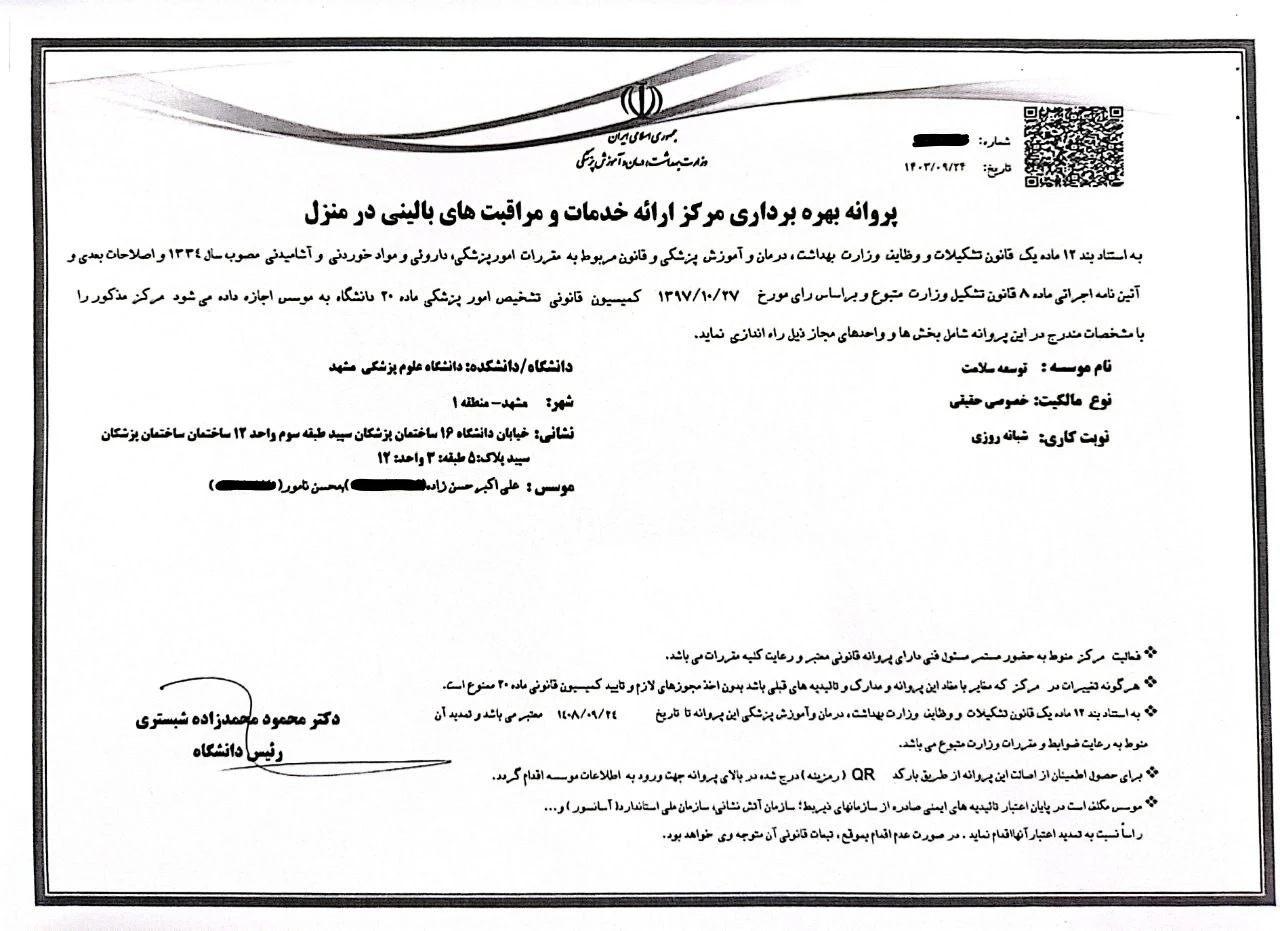
Tose Salamat clinical care centre provides hospital patient companion services in Mashhad with trained, experienced staff. The service is tailored to each patient and arranged in line with hospital rules, and can include accompanying older people, patients after surgery, patients with limited mobility and anyone else who needs extra support during a hospital stay.
For more information or to arrange the service, call Tose Salamat centre on +98 930 900 9159.