
Description
Patients who have spent time in an intensive care unit (ICU) do not always need only simple care after discharge. Many still need continuous monitoring, medical equipment, trained nurses and a regular treatment plan.
In such cases, intensive care at home can be a safe way to continue treatment for patients whose condition has stabilised and whom the doctor considers ready to leave hospital. The aim is to provide specialist care at home while keeping close contact with the treating doctor — not to replace the hospital ICU completely.
For many families, continuing treatment at home means less travel and more peace of mind for the patient. However, this kind of care is only possible when the doctor has judged the patient suitable for treatment at home.
What is intensive care at home?
Intensive care at home is a set of medical and nursing services for patients who have passed the critical stage of illness but still need specialist care, medical equipment and continuous monitoring. It may include:
- Monitoring vital signs
- Respiratory care
- Oxygen therapy
- Tracheostomy care
- Airway suctioning
- IV fluids
- Intravenous medicines
- Tube feeding
- Urinary catheter care
- Pressure ulcer prevention
- Pain control
- Wound care
- Coordination with the treating doctor
The services each patient receives depend on their clinical condition, the doctor’s opinion and their treatment needs.
Which patients may need intensive care at home?
Not every patient is suitable. The treating doctor decides, after reviewing the patient’s condition, whether treatment can continue at home. Patients who may benefit include:
Patients discharged from ICU
Some patients, once stable, still need specialist care but no longer need to stay in a hospital ICU.
Stroke patients
After a stroke, patients may need respiratory care, tube feeding, bedsore prevention and rehabilitation for a while.
Patients with a tracheostomy
They usually need daily tracheostomy care, suctioning, secretion control and family training.
Patients dependent on oxygen or a ventilator
Some patients with advanced lung or neurological disease may, on the doctor’s advice, receive part of their respiratory care at home. This must be done with suitable equipment and a trained team.
Patients with spinal cord injury
People with severe spinal cord injury may need round-the-clock care, pressure ulcer prevention, catheter management, respiratory care and safe transfers.
Older people with advanced illness
Some older people with advanced chronic illness can, with the doctor’s approval, receive specialist care at home for greater comfort and quality of life.
Equipment needed for intensive care at home
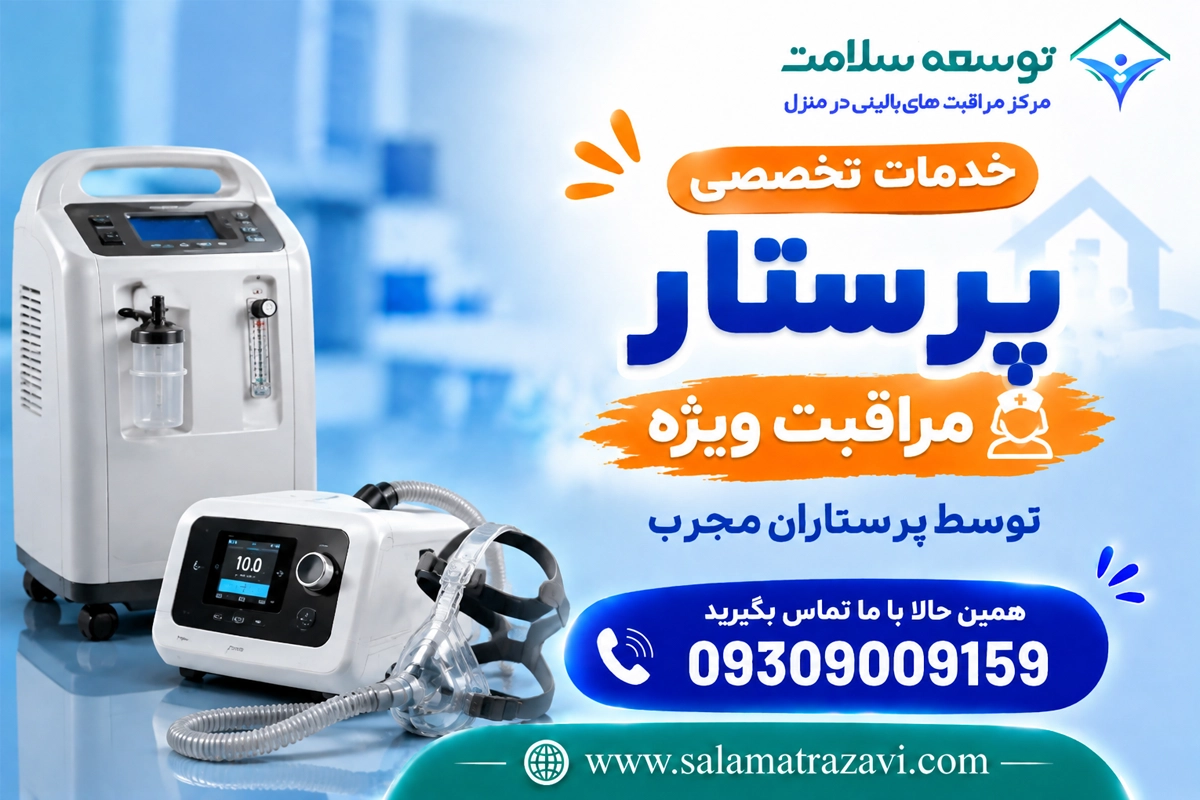
The equipment depends on each patient and may include:
- Electric hospital bed
- Alternating-pressure mattress to prevent bedsores
- Oxygen concentrator
- Oxygen cylinder
- Suction machine
- Vital-signs monitor
- Pulse oximeter
- Syringe pump or infusion pump
- Ventilator (for patients prescribed one by the doctor)
- Nebuliser
- Dressing and wound care supplies
Equipment must go hand in hand with family training and experienced clinical staff to keep the patient safe.
The ICU nurse’s role at home
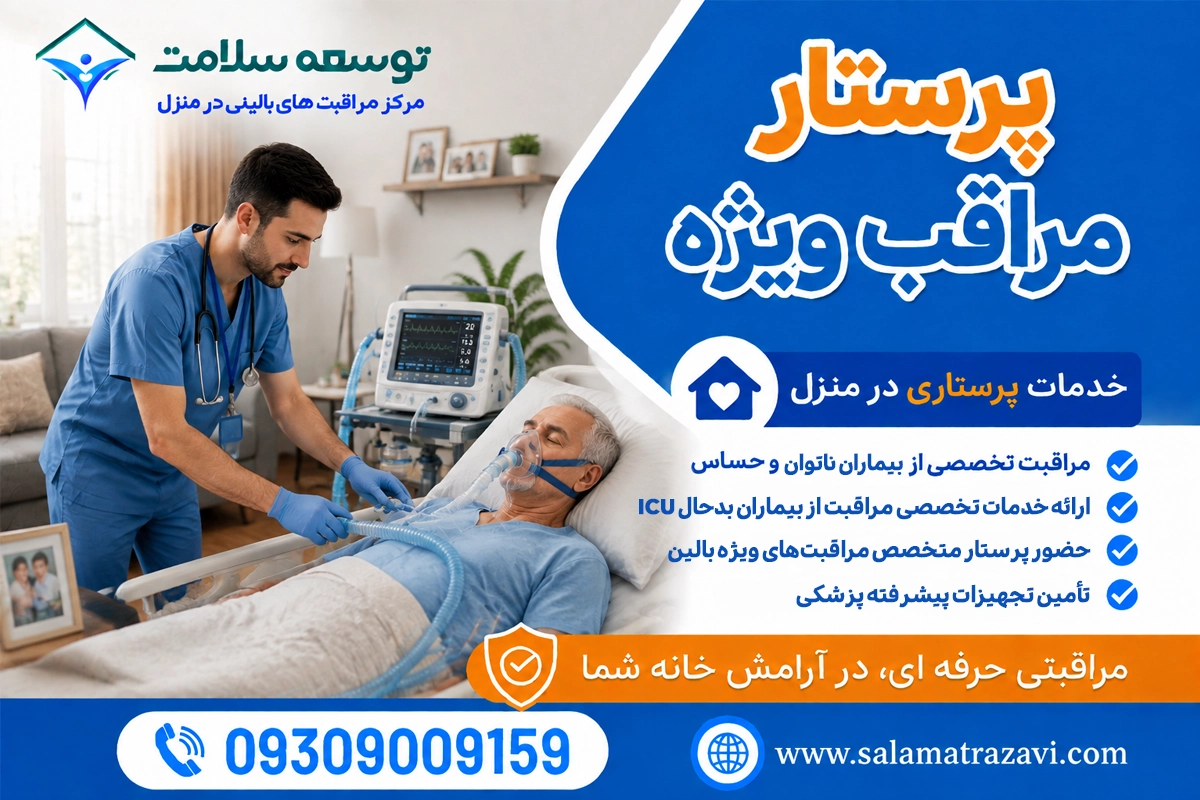
A nurse caring for an intensive-care patient at home does more than give injections or check vital signs. They continuously assess the patient, recognise important changes and coordinate with the treating doctor when needed. Key duties include:
- Regular monitoring of blood pressure, pulse, breathing rate, temperature and blood oxygen
- Assessing level of consciousness
- Airway care and helping maintain adequate breathing
- Suctioning when needed, as trained and ordered by the doctor
- Caring for and cleaning the tracheostomy
- Checking and changing dressings with sterile technique
- Urinary catheter care and checking urine amount and colour
- Preventing pressure ulcers (bedsores)
- Carrying out the doctor’s medication orders precisely
- Teaching the family how to care for the patient correctly
- Recording important changes and informing the doctor of warning signs
Caring for a patient with a tracheostomy
A tracheostomy is an artificial airway to the lungs created in some patients. Correct care is important to prevent infection, blockage and breathing problems. Routine care includes:
- Checking the airway is open
- Cleaning around the stoma with sterile technique
- Changing the dressing when needed
- Suctioning secretions when indicated
- Checking for signs of infection such as redness, swelling or discharge
Any significant bleeding, shortness of breath or sudden dislodgement of the tracheostomy tube needs urgent medical assessment.
Caring for a ventilator-dependent patient
Some patients still need a ventilator after hospital discharge. Their care must follow a clear plan from the doctor and be provided by a trained team. Particularly important are:
- Making sure the machine works correctly
- Checking connections and the breathing circuit
- Continuous monitoring of blood oxygen
- Airway care
- Infection prevention
- Suctioning when needed
- Checking the skin where equipment touches it
Preventing bedsores
Pressure ulcers are among the most common problems in long-term bedbound patients, and preventing them is much easier than treating them. Effective measures include:
- Changing the patient’s position about every two hours, where possible and medically appropriate
- Using an alternating-pressure mattress or other pressure-relief aids when needed
- Keeping the skin clean and dry
- Checking pressure points such as heels, hips, elbows and the sacrum daily
- Ensuring adequate nutrition and protein as advised by the doctor or dietitian
- Reducing friction and shear when moving the patient
If you see persistent redness, a blister or a sore, tell the doctor or nurse promptly.
Nutrition for intensive-care patients
Good nutrition is a cornerstone of recovery. Depending on the situation, the patient may be fed:
- By mouth.
- Through a nasogastric tube (NGT).
- Through a gastrostomy (PEG).
The diet, amount and feeding rate should follow the doctor’s or dietitian’s instructions and should not be changed without advice.
Benefits of intensive care at home
When the patient is chosen correctly and the conditions are in place, this service has several benefits:
A calmer patient
Many patients feel safer and calmer in familiar surroundings, which can improve their quality of life.
More family involvement
Being with the patient allows the family to be trained directly and take part in daily care.
Fewer unnecessary trips
For patients for whom moving is difficult or risky, care at home avoids unnecessary visits.
A personalised care plan
At home, care is planned around the individual patient, allowing closer attention to their needs.
Limitations of intensive care at home
Despite its benefits, intensive care at home has limits and does not fully replace a hospital ICU. It is suitable for patients who:
- Are haemodynamically stable.
- Have the doctor’s approval to continue treatment at home.
- Have the necessary equipment at home.
- Have a cooperative family.
- Can access medical services if a problem arises.
Patients who need continuous emergency interventions, urgent surgery or advanced hospital care must be admitted to hospital.
Common mistakes families make
Some mistakes can endanger the patient:
- Changing medicines or doses without advice
- Adjusting medical devices without training
- Delaying reporting warning signs to the doctor
- Moving the patient incorrectly, increasing the risk of injury or bedsores
- Poor hand hygiene during care
- Neglecting the feeding or fluid plan
Family training and regular contact with the care team play an important part in preventing these problems.
Warning signs: when to go to hospital immediately
Although many patients can be cared for at home after discharge on the doctor’s advice, some signs point to an emergency, and you should not wait for the next visit. Call emergency services or take the patient to the nearest medical centre immediately if you notice:
- A sudden drop in consciousness or the patient becoming unresponsive
- Severe shortness of breath or stopped breathing
- A severe fall or abnormal rise in blood pressure with symptoms
- Severe chest pain
- Seizure
- Severe or uncontrolled bleeding
- High, persistent fever with chills in a patient at risk of infection
- A significant drop in blood oxygen, as defined by the doctor
- Accidental removal of the tracheostomy tube, feeding tube or other vital equipment
- Sudden blue or very pale skin
Rapid recognition and action can prevent serious complications.
The family’s role in patient care
Successful intensive care at home does not depend only on equipment or the nurse; the family is an important part of the care team. Family members can help by:
- Washing hands before and after contact with the patient
- Following the medication and feeding plan
- Recording important changes such as fever, blood pressure or consciousness (if the doctor advises)
- Helping reposition the patient as the nurse has taught
- Keeping the environment calm and supporting the patient emotionally
- Reporting any unusual sign to the care team promptly
Myths about intensive care at home
“Any illness can be treated at home like in a hospital ICU.”
No. A hospital ICU has a specialist team around the clock, advanced equipment and the ability to intervene immediately. Intensive care at home is only suitable for patients the doctor has judged stable enough to continue treatment at home.
“Once the patient is home, there is no more risk.”
Discharge from hospital does not mean the end of care. Many patients still need close monitoring, regular medicines and medical follow-up.
“The family can do all the care without training.”
Some tasks — tracheostomy care, suctioning, using medical equipment or tube feeding — need training and supervision and should not be done without them.
Frequently asked questions
Does intensive care at home replace a hospital ICU?
No. It is designed for patients whose condition is stable and whom the doctor considers suitable for continued treatment at home. In critical situations, the patient must be in hospital.
Can a patient with a tracheostomy be cared for at home?
In many cases yes, but it depends on the patient’s condition, the doctor’s opinion, family training and access to equipment and the care team.
Can a ventilator-dependent patient be at home?
Some patients, with a clear treatment plan and after the doctor’s assessment, can receive care at home. This requires suitable equipment, adequate training and regular medical follow-up.
Can tests and imaging be done at home for these patients?
In many cases, services such as blood tests, ECG and portable X-ray can be done at home, depending on the patient’s condition and the facilities available.
Is the intensive care nurse present around the clock?
Depending on the patient’s needs and treatment plan, care can be arranged by the hour, by shift or around the clock.
Daily checklist for the family
If you are caring for a patient who needs intensive care at home, check these every day:
☐ Medicines have been taken as prescribed.
☐ The patient’s level of consciousness has not changed.
☐ Breathing is normal, with no signs of shortness of breath.
☐ The catheter, tracheostomy or dressing site is clean, with no signs of infection.
☐ The skin has been checked for redness or pressure ulcers.
☐ Feeding and fluids have been given as planned.
☐ Vital signs have been recorded (if the doctor advised).
☐ Any unusual change has been reported to the doctor or nurse.
Summary
Intensive care at home can be valuable for patients who have passed the critical stage and whom the doctor considers able to continue treatment at home. By combining medical knowledge, specialist nursing, suitable equipment and family cooperation, it supports continued treatment in a calmer setting.
Its success depends on choosing the right patient, training the family, continuous monitoring and close contact with the treating doctor. Remember that intensive care at home does not replace a hospital ICU, and if warning signs appear, going to a medical centre immediately is essential.
With trained nurses and medical and nursing services at home in Mashhad, the Tose Salamat home clinical care centre provides specialist care for patients who need to continue treatment at home. If needed, a doctor’s visit, lab tests at home, portable X-ray, ECG, injections, IV therapy, suctioning, tracheostomy care, catheter changes, specialist wound dressing and medical equipment can also be arranged with the care team. For more information, call +98 930 900 9159.