
Description
The internal medicine specialist at home in Mashhad: diagnosing, treating and monitoring complex illness
An internal medicine specialist (internist) is one of the pillars of clinical medicine, taking a comprehensive, many-sided view of adult illness to assess, diagnose, treat and monitor a wide range of acute and chronic conditions. Contrary to the common belief that internal diseases are limited to one organ or system, internal medicine deals with several body systems at once, including the heart and circulation, lungs, digestive system, kidneys, endocrine glands, blood, rheumatology and infectious diseases.
A home visit by an internal medicine specialist in Mashhad is a very important and effective service for patients who cannot attend in person because of general weakness, old age, limited mobility, long-term bed rest, severe pain or multiple illnesses.
In this model of care, the clinical assessment takes place in the patient’s real living environment, so the doctor can judge not only the physical condition but also the patient’s nutrition, medicines and surroundings more accurately. This is especially important for patients with several conditions (multimorbidity), older people taking many medicines (polypharmacy) and people with a history of repeated hospital admissions.
The initial home assessment: history, examination and clinical decisions
The first step in an internal medicine home visit is a detailed history and a focused physical examination. The doctor asks systematically about current symptoms, when the illness began, how severe the symptoms are and how they have progressed, what makes them better or worse, past illnesses, operations, current medicines, drug allergies, nutrition, sleep, physical activity and family history.
A physical examination guided by the main complaint follows. It includes vital signs such as blood pressure, pulse, breathing rate, temperature and oxygen saturation; hydration; skin and mucous membrane colour; listening to the heart and lungs; examining the abdomen; checking for swelling of the limbs; a neurological examination if needed; and looking for rheumatological or endocrine signs.
An important advantage of a home visit is that the doctor can observe the patient’s real symptoms in their natural environment. For example, in lung or heart disease, seeing how breathless the patient becomes when moving around the house or changing position gives valuable information.
In older patients, assessing walking, balance, fall risk and independence also helps the doctor make better decisions. After the examination, the internist decides on the need for laboratory tests, imaging, specialist consultation, starting or changing medicines, or referral to emergency services.
Managing heart and circulation problems at home
A large part of an internist’s work is managing cardiovascular disease, especially in patients who do not yet need a cardiologist or who need temporary monitoring at home. High blood pressure (hypertension) is one of the most common problems the internist diagnoses and controls.
Controlling blood pressure requires regular monitoring, medicine adjustment, attention to side effects and kidney function, and teaching the patient about lifestyle. In mild to moderate heart failure, checking for leg swelling, breathlessness, exercise tolerance and daily weight is very important. At home the internist can prevent worsening by adjusting medicines, limiting salt, watching for fluid retention and arranging echocardiography or an ECG.
Patients with arrhythmias, non-acute chest pain, palpitations or a history of ischaemic heart disease also need careful monitoring. The internist plays a key role in recognising warning signs and, if needed, refers the patient for further tests such as an ECG, Holter monitoring or a cardiology opinion.
In many older people, heart problems show up as weakness, lethargy, confusion or loss of appetite rather than classic chest pain, so the internist’s broad view at home can prevent diagnostic errors.
Managing respiratory and infectious diseases at home
Respiratory diseases such as asthma, COPD, chest infections, bronchitis, pneumonia and chronic breathlessness are widely assessed by internists.
In COPD, symptoms often flare up with infection, cold weather, irregular use of medicines or exposure to irritants. At home the internist can start or adjust treatment based on the examination and oxygen levels, teach correct use of inhalers and nebulisers, and recognise dangerous signs such as bluish skin, reduced alertness or falling oxygen saturation.
In respiratory infections, distinguishing between a simple cold, flu, COVID, bronchitis and pneumonia is very important. By checking fever, cough, sputum, pleuritic pain, lung sounds and the patient’s general condition, the internist decides whether antibiotics, diagnostic tests or urgent referral are needed.
In bedbound patients or older people at risk of aspiration pneumonia, monitoring nutrition, swallowing and alertness is particularly important. In systemic infections or fever of unknown origin, the internist can take a step-by-step approach to find the likely source of infection and guide appropriate treatment.
Managing digestive and liver problems at home
Digestive problems are a common reason to see an internist. Abdominal pain, bloating, indigestion, nausea, vomiting, diarrhoea, constipation, acid reflux and warning signs such as weight loss or gastrointestinal bleeding need careful assessment.
By taking a detailed history of how symptoms relate to food, medicines, stress, a past stomach ulcer, NSAID use or liver and gallbladder disease, the internist can set the course of diagnosis. At home the abdomen is examined for tenderness, distension, bowel sounds, localised pain or signs of peritonitis, and further tests are requested if needed.
In liver disease such as fatty liver, chronic hepatitis, cirrhosis or raised liver enzymes, the internist can decide, based on the clinical picture and tests, on lifestyle changes, weight control, dietary limits, monitoring of liver enzymes and checking for complications such as ascites or encephalopathy. In older or frail patients whose function has declined because of chronic constipation, poor appetite or abdominal pain, correct digestive treatment can improve quality of life considerably.
Endocrine and metabolic disorders at an internal medicine home visit
Endocrine and metabolic disorders are another important area of internal medicine. Diabetes mellitus, thyroid disorders, obesity, abnormal blood fats, metabolic syndrome and electrolyte disturbances are common at home visits. In diabetic patients the internist reviews fasting blood sugar, HbA1c, diet, insulin or tablet use, signs of hypoglycaemia, and kidney, eye and nerve complications. Regular diabetes monitoring at home is especially important for older people, bedbound patients and people with diabetic foot ulcers.
In thyroid disorders, symptoms such as palpitations, tremor, weight loss or gain, fatigue, constipation, sweating, restlessness or drowsiness must be interpreted carefully. The internist adjusts treatment after checking TSH and other relevant tests.
In patients with obesity and metabolic syndrome, blood pressure, blood sugar, blood fats, waist size and activity are assessed and a plan is made to reduce cardiovascular risk. Advice on nutrition, suitable physical activity and lifestyle change is an essential part of internal medicine care at home.
Managing kidney disease and fluid and electrolyte disorders
Kidney disease and fluid and electrolyte disorders are another important area. Patients with raised creatinine, reduced kidney function, protein loss, dehydration, swelling or abnormal sodium and potassium need careful follow-up.
At a home visit the doctor can recognise signs of dehydration, such as a dry mouth, reduced urine, a drop in blood pressure on standing or confusion, and also look for signs of fluid overload, such as swelling, breathlessness and weight gain.
In chronic kidney disease (CKD), adjusting medicine doses, checking kidney function in relation to high-risk medicines and monitoring potassium and acid–base balance are especially important. In some patients, medicines such as NSAIDs, some antibiotics or blood pressure medicines need extra care.
Based on laboratory and clinical findings, the internist decides on fluid limits, dietary changes, referral to a nephrologist and preventing progression. This care at home prevents unnecessary admissions and increases patient safety.
Caring for patients with rheumatological conditions and chronic pain
Joint and muscle pain, morning stiffness, swollen joints, limited movement and general symptoms such as fatigue or low-grade fever can be signs of rheumatological disease.
At home the internist can carry out an initial assessment of patients with rheumatoid arthritis, osteoarthritis, lupus, gout or musculoskeletal pain. In these patients it is essential to look carefully at the pattern of pain, the number of joints involved, any redness or warmth, the length of morning stiffness and associated symptoms.
In osteoarthritis the aim is to reduce pain, maintain function and prevent increasing disability. In inflammatory arthritis, early diagnosis and referral for specialist treatment can prevent joint damage. As well as controlling pain, the internist at home explains correct use of medicines, possible side effects, the need for regular tests and the importance of balancing rest and activity. In frail or older patients, managing chronic pain improves sleep, mobility and mood.
The internist’s role for older patients with several conditions
Older people often live with several chronic conditions at once, such as high blood pressure, diabetes, heart failure, arthritis, cognitive impairment and general frailty. In this group the risks of drug interactions, falls, dehydration, malnutrition and repeated admissions are very high. At home the internist can assess the older person’s function, cognition, medicines and nutrition comprehensively, including walking, balance, previous falls, hearing, eyesight, sleep, incontinence, constipation, depression and family support.
In older people, many illnesses present with unusual symptoms. For example, a urinary infection may appear as confusion, weakness or agitation rather than burning on passing urine, and dehydration can cause low blood pressure, constipation or reduced alertness. An internal medicine home visit for an older person is therefore not just a simple examination but comprehensive, preventive care that helps maintain independence and reduce complications.
Interpreting tests and arranging diagnostic services at home
An important feature of an internal medicine home visit is the ability to make decisions based on tests and diagnostic services. Depending on the symptoms, the doctor may request a CBC, ESR, CRP, blood sugar, HbA1c, kidney and liver function, electrolytes, urine tests, thyroid tests or further investigations. In some cases an ECG, ultrasound, echocardiogram or X-ray at home, or referral for one, is needed.
Tests must be interpreted in their clinical context, not in isolation. For example, a slightly raised CRP in an older patient with fever and weakness may indicate infection, but it is also seen in inflammatory or chronic disease. By considering all the information, the internist avoids unnecessary treatment and chooses the right follow-up. This is especially important in patients with several conditions, where every test and every medicine can have significant consequences.
Coordinating with nursing, occupational therapy and nutrition at home
Many patients need more than a single medical visit; they need team-based, multidisciplinary care, and the internist at home can be the starting point. Patients with reduced mobility need occupational therapy to improve daily function. Patients with malnutrition, diabetes, wounds or chronic illness need dietary therapy. Patients who need injections, wound care, monitoring of vital signs or medicine education need nursing services.
This coordination keeps treatment joined up. For example, a patient with heart failure may need medicine adjustment by the internist, blood pressure and vital-sign checks by a nurse, advice on cutting salt from a dietitian and light, safe exercises from an occupational therapist. This model of care reduces readmissions and complications and makes treatment more effective.
Benefits of an internal medicine home visit in Mashhad
An internal medicine home visit has many benefits for the patient and family. First, it removes the difficulty of moving frail, painful or older patients. Second, it reduces waiting times and exposure to infections in healthcare settings. Third, it allows the doctor to see the patient’s real living conditions and make more accurate decisions. The family also has more opportunity to ask questions and receive advice directly from the doctor.
In many cases going to a surgery is very difficult or even dangerous for the patient. Here, an internal medicine home visit is a smart, safe and evidence-based solution, suitable not only for very ill patients but also for people who need regular follow-up of chronic conditions.
Tose Salamat clinical care centre, Mashhad
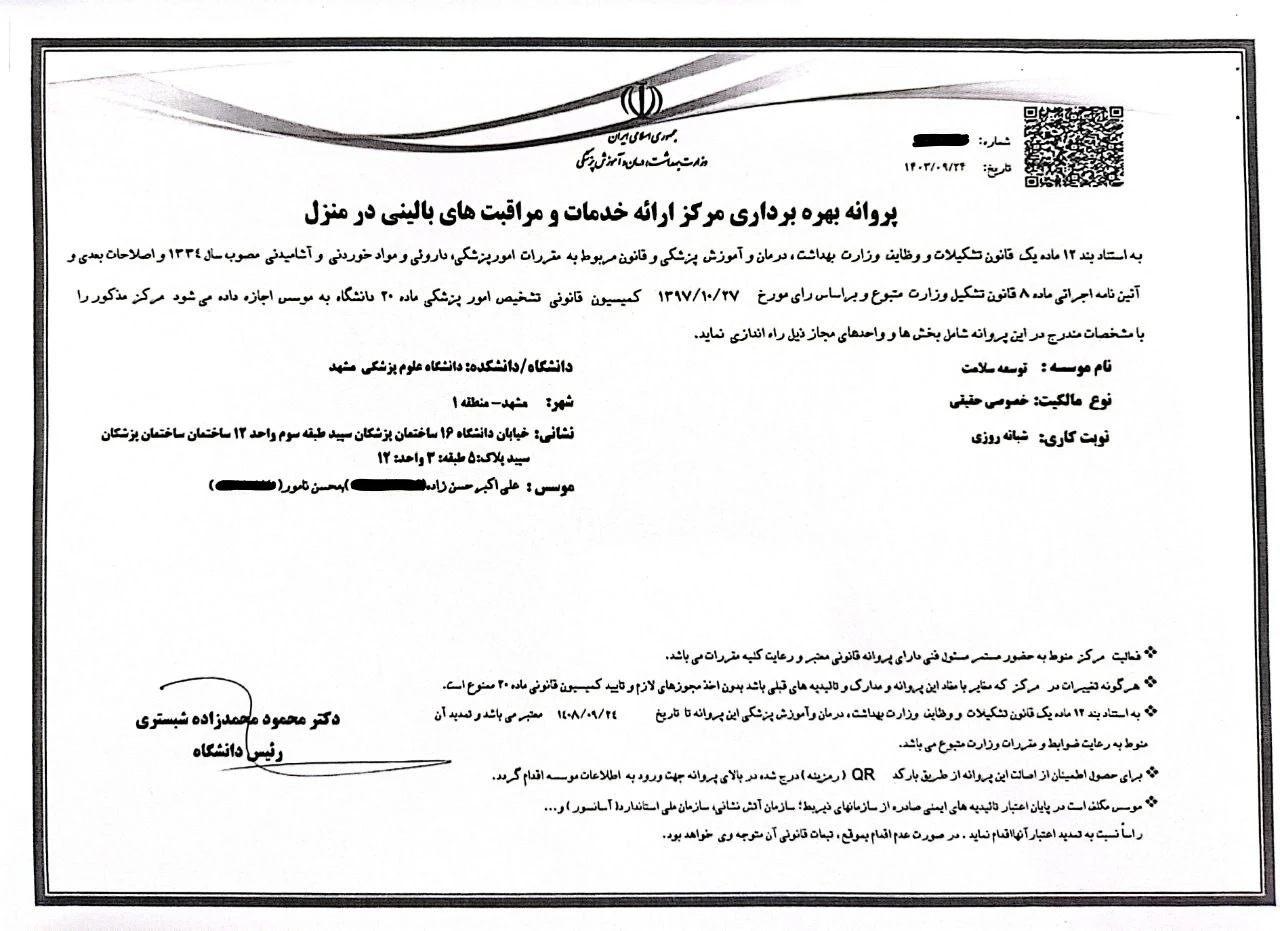
Tose Salamat clinical care centre in Mashhad, with an experienced team of internal medicine specialists, professional nurses, occupational therapists and home-care staff, provides internal medicine home visits in all areas of Mashhad. Taking a careful, evidence-based approach built around each patient’s real needs, the centre makes it possible to assess, diagnose, treat and follow up many internal medical conditions at home, so patients and families can receive standard medical care with peace of mind.
To arrange a home visit by an internal medicine specialist, get advice or set up a treatment plan, call +98 930 900 9159.
Frequently asked questions
Which conditions does an internal medicine specialist treat at home?
Our internists examine and treat a wide range of adult conditions at home, including digestive and liver problems, endocrine disorders (such as diabetes and thyroid disease), respiratory and infectious diseases, rheumatic conditions and large swings in blood pressure.
Can an internist at home order tests or imaging?
Yes. If more detailed investigation is needed, the internist orders blood or urine tests or imaging through an electronic prescription. You can use our centre’s home laboratory and portable radiology services to have them done without moving the patient.