Description
Childcare nurse at home in Mashhad
Childhood is the most sensitive and important stage of physical, emotional, social and cognitive development. In today’s fast-paced world, balancing parents’ work, study and family commitments with children’s care, health and medical needs brings many challenges. For families in Mashhad, access to a safe, skilled and available support system for looking after children at home is essential. Childcare at home is more than simple babysitting: it combines knowledge of developmental psychology, paediatric nursing, nutrition, general hygiene and first aid, with the aim of promoting the child’s all-round health and giving parents peace of mind.
This practical guide looks at the different aspects of caring at home for healthy children, sick children, premature babies and children with special needs, so that families in Mashhad can make the best decision for their children’s health and future.
What is childcare at home?
Childcare at home is the range of health, care, educational and supportive services provided to a child in the familiar setting of their own home by a childcare worker (a mother’s helper, a child companion or a specialist paediatric nurse). Depending on the child’s age, physical and emotional health and the family’s needs, care can be arranged by the hour, by the day, around the clock or for a set period.
Because home offers emotional security, physical stability and less exposure to germs (such as infections picked up in hospitals or nurseries), it is an ideal setting for healthy growth and for the recovery of sick children. Specialist care at home allows children to develop their motor and cognitive skills along their natural path, without the separation anxiety or stress of unfamiliar places.
Mother’s helper, child companion and specialist paediatric nurse: what is the difference?
In home care, a clear division of roles matters a great deal for quality:
Mother’s helper: mainly provides support, cleaning, help for the mother with the baby’s daily routine and basic care, acting as an extra pair of hands for the mother.
Child companion: has basic training in child development, creative play and parenting approaches, and focuses on education, play and the mental development of healthy children.
Specialist paediatric nurse (clinical nurse): a nursing graduate with specialist knowledge of childhood illnesses, vital signs, giving medicines, dressings, injections, using medical equipment (such as oxygen concentrators or phototherapy units) and paediatric resuscitation (PALS). They are usually sent to care for sick, premature or disabled children.
Who needs childcare at home?
The need for these services is very broad and includes many kinds of families. Identifying the family’s needs accurately is the first step in choosing the right type of care.
Busy working parents in Mashhad
Many parents in Mashhad who work in government, private, healthcare or university jobs cannot be with their child all the time. Sending a very young child to nursery may expose them to repeated respiratory and stomach infections. Care at home allows these families to guide their child’s upbringing and nutrition according to their own approach.
Premature and newborn babies (postnatal care)
Babies born early (premature) or with a low birth weight have very weak immune systems, and taking them out of the home increases the risk of serious infection. A specialist newborn nurse plays a vital role in the baby’s survival and growth by monitoring vital signs and weight gain, keeping the room at the right temperature, caring for the umbilical cord and helping the mother with breastfeeding.
Children with chronic and special conditions
Children with conditions such as cerebral palsy (CP), type 1 diabetes, severe asthma, epilepsy and seizure disorders, childhood cancers and kidney or heart failure need continuous clinical care. Taking these children repeatedly to clinics and hospitals not only exhausts them but also exposes them to hospital infections.
Children with special needs and developmental disorders
Children with autism (ASD), attention deficit hyperactivity disorder (ADHD), Down syndrome or intellectual or physical disabilities need care based on behavioural therapy and ongoing rehabilitation. The stability of home helps their treatment programmes run with less stress.
Warning signs in a child’s health that need urgent attention
One of the main tasks of a childcare worker at home is to monitor the child’s health continuously and notice abnormal signs early. Children’s bodies change quickly, and ignoring small signs can lead to a child becoming seriously unwell.
High fever and febrile seizures
Fever in children usually shows that the immune system is fighting an infection. However, a fever above 38.5°C, especially between 6 months and 5 years of age, carries a risk of febrile seizure. The carer should know how to measure temperature accurately (skin, ear or under the tongue), how to sponge the child correctly with lukewarm water (not cold water or alcohol) and how to give paracetamol or ibuprofen safely (ibuprofen only from 6 months of age, and always at the correct dose).
Signs of respiratory distress
Fast breathing (tachypnoea), the skin pulling in between the ribs or under the breastbone when breathing in (retractions), flaring of the nostrils and grunting or wheezing on breathing out are signs of serious breathing problems such as pneumonia, bronchiolitis or an asthma attack and need an urgent doctor’s visit at home or transfer to a medical centre.
Dehydration from diarrhoea and vomiting
Children lose body fluid quickly. Signs of dehydration include:
* fewer wet nappies (no urine for more than 6 hours)
* a dry tongue and mouth
* crying without tears
* sunken eyes
* a sunken fontanelle (soft spot) in babies
* extreme lethargy or unusual sleepiness
Changes in behaviour and alertness
Severe lethargy, not responding to surroundings, unusual irritability (constant, inconsolable crying), floppiness and deep sleepiness from which the child is hard to wake are emergency signs involving the nervous system.
Why choose childcare at home?
There are many reasons to choose home care, rooted in the child’s emotional health, the family’s well-being and better quality of care.
Less separation anxiety
Young children are strongly attached to their home and parents. Being placed in unfamiliar settings such as nurseries or busy clinics raises the stress hormone cortisol, which can weaken the immune system and disrupt learning and development. A nurse at home keeps this stress to a minimum.
Preventing infectious diseases
In nurseries, where many children are together and hygiene habits (such as regular handwashing or covering the mouth when sneezing) are not yet established, viral infections such as flu, COVID and chickenpox, and stomach infections such as rotavirus, spread quickly. One-to-one care at home breaks this chain of transmission.
Personalised routines for growth, nutrition and learning
Every child has their own biological rhythm and preferences. In nurseries, sleep, meals and play are scheduled for the group. A private nurse at home can match sleep, nutrition (based on the paediatrician’s advice), cognitive play and learning activities to the individual child.
Benefits of childcare at home
Safety and comfort: the child stays in their own bed and room, with their own toys.
Full attention: unlike a nursery, where one carer looks after several children, at home the nurse’s attention is entirely on one child.
Flexible hours: parents can match the nurse’s hours to their work shifts.
Lower extra costs: no daily travel to a nursery or clinic.
Direct parental oversight: parents can follow the care through home cameras or regular reports from the nurse.
Possible drawbacks and how to manage them
Despite its many advantages, home care has some challenges that should be managed wisely:
Less contact with other children: staying at home all the time may reduce chances for group play.
Solution: plan visits to parks, play centres or playdates with other children, supervised by the nurse.
Strong attachment to the nurse: the child may become very attached, making separation harder.
Solution: keep healthy boundaries and make sure parents spend active time with the child outside working hours.
Security and trust: bringing a new person into the privacy of the home requires careful checks.
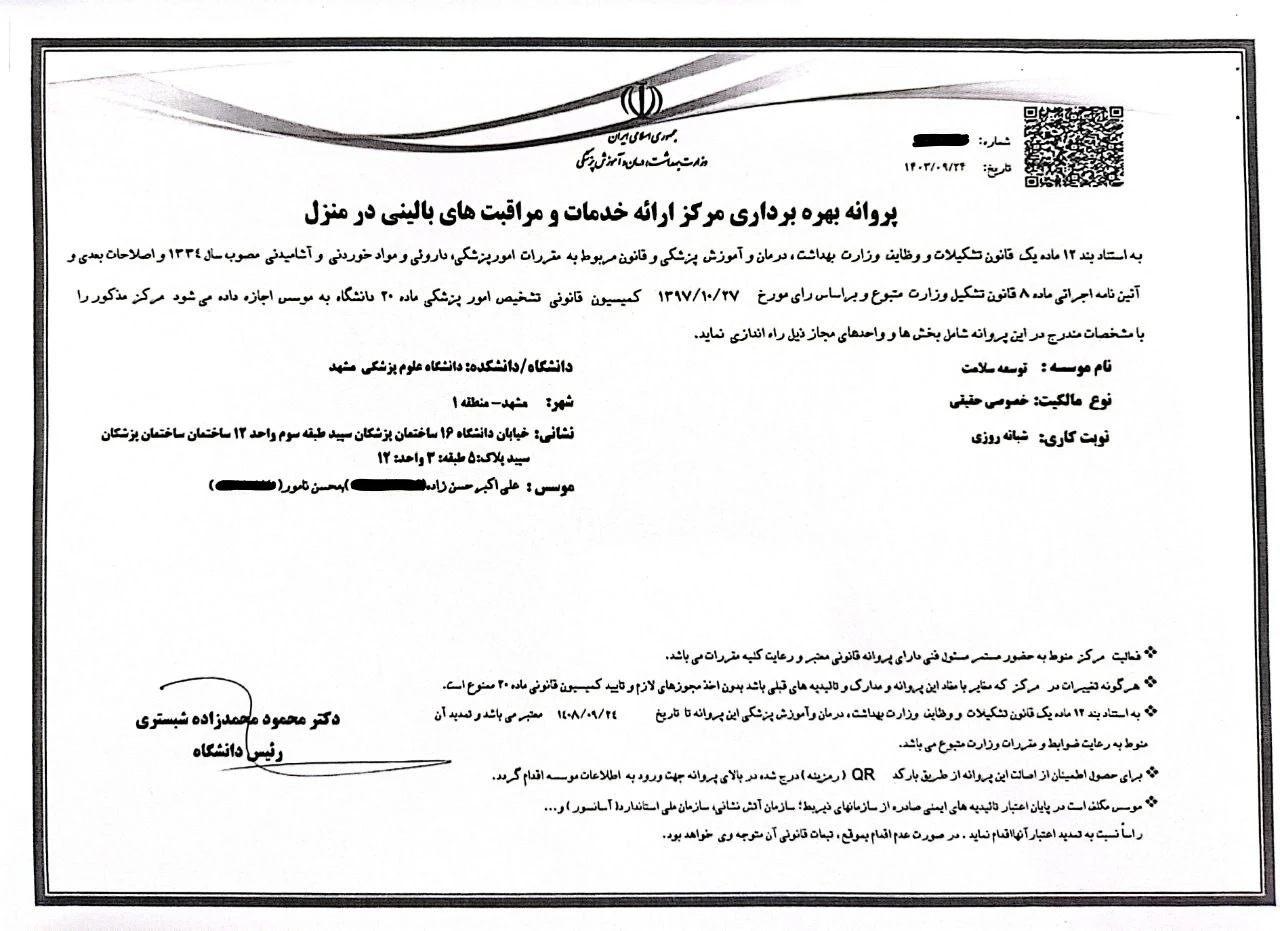
Solution: use licensed, reputable centres such as Tose Salamat centre, which carefully select their staff and carry out identity and background checks.
When non-specialist childcare at home is not appropriate
In certain clinical situations, untrained carers or mother’s helpers without medical knowledge must not be used, and a clinical paediatric nurse is essential:
Children dependent on life-support equipment, such as a ventilator, tracheostomy or tube feeding (G-tube).
Children in active phases of chemotherapy, because of very low white blood cell counts and a high risk of opportunistic infections.
Children with severe bleeding disorders (such as severe haemophilia), where the smallest knock or fall can cause dangerous internal bleeding.
Children with frequent seizures that do not respond to treatment and who need intravenous or rectal anti-seizure medicine during an attack.
Preparing before the nurse arrives
For a safe, successful start, parents should prepare the home and write down essential information.
Childproofing the home
1. Fit socket covers and lock cupboards containing cleaning products and medicines.
2. Use corner guards on sharp edges of tables and furniture.
3. Fit secure window guards and stair gates.
4. Remove small objects, coins, button batteries and non-standard toys that could cause choking.
An essential information and contact book
Parents should prepare a notebook with the following information and keep it where the nurse can find it:
* emergency phone numbers (father, mother, paediatrician and the emergency services, 115 in Iran);
* a full list of the child’s food and drug allergies;
* a medicine schedule with exact doses;
* the address and phone number of the nearest children’s hospital in Mashhad.
Steps and principles of childcare at home
Evidence-based care has several key parts that vary with the child’s age (baby, toddler, preschool and school age).
Hygiene and cleanliness
Handwashing: teaching and practising regular handwashing before meals, after using the toilet and after coming in from outside.
Changing nappies on time and preventing nappy rash: using barrier creams containing zinc oxide and washing gently with lukewarm water.
Oral hygiene: regular tooth brushing from the first tooth, with a finger brush or a soft toothbrush.
Healthy, age-appropriate nutrition
First six months: exclusive breastfeeding or a suitable infant formula prepared correctly.
Starting solid foods: gradually introducing simple purées, porridges and plain soups without salt or spices, while watching for signs of allergy.
Toddlers: focusing on foods rich in calcium, iron, zinc and B vitamins, and avoiding fast food, processed snacks and added sugars.
Promoting cognitive and motor development through play
Play is children’s natural way of exploring the world. The nurse should use purposeful play:
Gross motor skills: active games, running, throwing a ball, balancing.
Fine motor skills: play dough, age-appropriate puzzles, drawing and hand activities.
Cognitive and language skills: reading stories, rhymes, active conversation, thinking games and logic puzzles.
Care during and after illness at home
When a child is ill, home becomes a care centre, and the role of the clinical nurse becomes very important.
Managing fever and body temperature
A sick child’s temperature should be checked every 2 to 4 hours. Light cotton clothing, keeping the room cool (around 22–24°C) and plenty of fluids to prevent dehydration are essential. Fever medicines must be dosed by the child’s weight, not their age.
Safe medicine giving for children
Never call medicine “sweets” or “juice”, as the child may look for it and take it on their own when no one is around. Medicines should be given with marked oral syringes or standard measuring cups. The nurse must follow the “five rights” of medication: right patient, right medicine, right dose, right time and right route.
Care during recovery from infectious illness
After the acute phase of illnesses such as measles, mumps, flu or COVID, a child’s immune system stays weaker for a while. During this time the priorities are a high-calorie, high-protein diet, vitamin C, plenty of rest and avoiding crowded places so the child can regain strength.
Risks, complications and dangerous situations in childcare
Knowing the dangerous situations and preventing them is a cornerstone of keeping children physically safe at home.
Poisoning by medicines and chemicals
Because they are curious, children like to smell or drink colourful objects and liquids. Coloured tablets, cleaning products under the sink, antifreeze and plant poisons must be kept completely out of reach. If poisoning is suspected, call the poison information centre or the emergency services (115) immediately.
Choking on foreign objects
Nuts (especially peanuts), whole grapes, hard sweets, pieces of sausage and toys with small parts are not suitable for children under 3. The nurse and parents should be well trained in choking first aid (back blows, chest thrusts and the Heimlich manoeuvre) for babies and children.
Falls and injuries
Falls from beds without rails, high chairs, stairs and windows are common causes of injury in children. After a fall, the child must be checked carefully for signs of head injury (repeated vomiting, lethargy, abnormal eye movements, fluid coming from the ears or nose).
Common mistakes and myths in childcare
Many cultures have mistaken beliefs about childcare that have no scientific basis and can sometimes be dangerous:
Myth: use alcohol or cold water to sponge a child with fever.
Fact: alcohol can be absorbed through the skin and cause serious poisoning. Cold water narrows the blood vessels of the skin (vasoconstriction), keeps heat in the body and makes shivering more likely. Use lukewarm water (about 30–32°C).
Myth: insist that a sick child eats.
Fact: during illness a child’s appetite naturally falls because the body’s energy is used to fight infection. Pressuring the child can cause vomiting and food aversion. Focus instead on keeping the child hydrated with thin soups, fluids and oral rehydration solution (ORS).
Myth: teething is the main cause of high fever and bloody diarrhoea.
Fact: teething may cause a mild rise in temperature (below 38°C), drooling and fussiness, but high fever and severe diarrhoea are usually caused by viral or bacterial infections and need medical assessment.
Daily checklist for safe childcare at home (for the nurse and parents)
Parents and the nurse can use this checklist to review daily standards of care:
Keep the room temperature between 21 and 23°C, with fresh air.
Check that there are no small, sharp or toxic objects within the child’s reach.
Monitor and record fluids, main meals and snacks.
Provide at least one hour of active physical play and one hour of screen-free thinking or learning activity.
Disinfect toys the child puts in their mouth.
Record the exact times of daytime naps and night-time sleep.
Check bowel and bladder habits (count nappies or monitor toilet use).
Paediatricians’ advice on home care
Paediatricians always stress the importance of prevention. Key recommendations include:
1. Follow the national vaccination schedule exactly: do not delay any vaccine because of a mild cold or mistaken beliefs.
2. Avoid self-medication: giving antibiotics for viral illnesses not only causes resistance but also harms the gut flora.
3. Limit screen time: for children under 2, screen use (phones, tablets, TV) should be avoided, and for older children it should be limited to about one hour a day, to support attention, behaviour and language development.
Frequently asked questions (FAQ)
1. Can a childcare nurse in Mashhad also clean the whole house?
The nurse’s main role is caring for the child and their development, preparing the child’s food and keeping the child’s room and play area clean. Heavy housework is outside the role of a specialist childcare nurse; if needed, a mother’s helper or housekeeper should be arranged separately.
2. How can I tell whether my child has settled with the new nurse?
Your child’s behaviour is the best sign. If, after an initial settling-in period (usually one to two weeks), your child is cheerful with the nurse, goes to them easily, has no nightmares and has no major problems with eating or sleeping, this shows a positive, healthy bond.
3. What is the nurse’s first action if an accident happens at home?
The first step is to stay calm, give immediate first aid (such as controlling bleeding or choking first aid) and at the same time call the emergency services (115) and the parents. The nurse must have the exact home address and emergency numbers to hand.
4. How is the cost of a childcare nurse at home in Mashhad calculated?
Costs depend on several factors, including the nurse’s qualifications (child companion or registered nurse), working hours (hourly, daily or 24-hour), the child’s age, their health (healthy or ill) and the tasks the family requests.
5. Does Tose Salamat centre offer 24-hour childcare?
Yes. Childcare and clinical nursing for children at home in Mashhad can be arranged around the clock, daily or hourly, according to the family’s needs.
6. If my child has a bad cold, can the nurse give an IV drip or injection?
Injections and IV drips for children at home are given only by a registered nurse, and only on a doctor’s written, signed order. Mother’s helpers and untrained carers are not permitted to carry out any invasive medical procedure.
7. How can we be sure of a nurse’s background and character?
We strongly advise against hiring freelance workers with no formal affiliation. Reputable centres such as Tose Salamat centre complete identity checks, obtain financial guarantees, criminal record and drug-free certificates, and carry out mental health assessments before employing staff.
8. Can tablet and phone games replace the nurse’s thinking games?
No. According to paediatric guidance, excessive screen use can hold back children’s brain development and social skills. The nurse should offer engaging alternatives such as interactive games, reading and sensory-motor play.
9. How can we prevent severe nappy rash in a baby at home?
The best approaches are changing nappies promptly (at least every 3 hours), washing with lukewarm water without perfumed soaps, patting the skin completely dry with a soft cotton towel, and using creams containing zinc oxide or dexpanthenol.
10. What is the right approach if a child refuses medicine?
Never force medicine down a child’s throat, because of the risk of the liquid entering the airway (aspiration). Give small amounts with a dropper or oral syringe into the side of the cheek, or, with the doctor’s advice, mix it with a little yoghurt or fruit purée.
Summary and choosing the right service
Investing in skilled, hygienic care for children at home is a fundamental step towards securing the physical and emotional health of the next generation. In Mashhad, many families are looking for a trustworthy provider that combines clinical expertise, ethical commitment and up-to-date knowledge of child psychology. Choosing correctly between a mother’s helper, a child companion and a specialist clinical nurse according to the child’s real needs is the key to the best outcome.
Tose Salamat clinical care centre, with experienced doctors, nurses and healthcare staff, provides treatment and care at home and, when needed, in healthcare centres in Mashhad. For advice and to arrange services, call +98 930 900 9159.