Description
Elderly care nurse at home in Mashhad
Ageing is a natural part of life, but as people get older some need help with daily activities such as bathing, dressing, taking medicines, walking or eating. How much help is needed differs from person to person and should be assessed according to their physical, cognitive and emotional condition.
For many older people, continuing to live at home with their family brings more security and peace of mind. Care at home allows services to be matched to each person’s needs and, where necessary, a nurse, physiotherapist, doctor or other members of the care team can also help.
What is elderly care at home?
Elderly care at home is a set of support and care services — and medical services when needed — that aim to maintain independence, improve quality of life and reduce the risk of complications of ageing.
It can include:
- Help with bathing and personal hygiene
- Help with dressing
- Help with walking and moving
- Reminders or help with taking medicines
- Preparing and serving meals
- Checking vital signs when needed
- Company during daily activities
- Fall prevention
- Arranging medical services at home
Which older people most need care at home?
Older people with limited mobility
People who move with difficulty because of osteoarthritis, a fracture, muscle weakness or other illness may need help with daily activities.
Older people with Alzheimer’s disease or dementia
They may struggle to remember when to take medicines, recognise their surroundings, stay safe or carry out daily tasks, and need closer supervision.
Older people after a stroke
After a stroke, some older people have muscle weakness, poor balance or a reduced ability to look after themselves; care at home helps continue their rehabilitation and care.
Older people with chronic illness
People with diabetes, heart failure, lung disease, Parkinson’s disease or other chronic illnesses may need regular care and monitoring.
Older people after surgery
After some operations, an older person may need help with daily activities for a while, so that they recover more safely.
What does elderly care at home include?
Services are tailored to each person and may include:
- Help with activities of daily living (ADL)
- Personal hygiene care
- Company on walks and help with mobility
- Help with eating
- Medicine reminders
- Monitoring general health
- Companionship to reduce loneliness
- Contacting the doctor or nurse if their health changes
Advantages of elderly care at home
Care at home has important advantages for many older people:
- Staying as independent as possible
- Living in a familiar, calm environment
- Less stress from moving
- Care matched to the person’s needs
- More family involvement in care
- Lower risk of some complications from unnecessary hospital stays
Studies show that well-planned care at home can improve older people’s quality of life and help them keep their daily functioning.
Caring for an older person with Alzheimer’s disease
Alzheimer’s disease is one of the most common causes of cognitive decline in older people. Those affected may have problems with memory, decision-making, knowing the time and place, or carrying out daily activities.
When caring for them, pay attention to:
- A regular daily routine
- Simple, calm sentences
- Not leaving them alone in risky situations
- Safety equipment at home
- Reminders for medicines
- A calm, familiar environment
- Food and fluid intake
The aim is to keep the person as independent as possible and to reduce their anxiety.
Caring for an older person who wears incontinence pads
Some older people need incontinence pads because of limited mobility, neurological disease or urinary or faecal incontinence. In this situation hygiene is very important. Key principles are:
- Changing pads regularly
- Washing and drying the skin thoroughly
- Using a barrier cream when needed
- Checking the skin daily for redness or sores
- Not leaving moisture on the skin
Following these steps can reduce the risk of skin inflammation and pressure ulcers.
Preventing bedsores in older people
Bedsores are a preventable problem in older people who are inactive or confined to bed. To reduce the risk:
- Change the person’s position every two to three hours.
- Use a suitable mattress when needed.
- Check the skin every day.
- Keep sheets smooth and free of creases.
- Ensure enough food and fluids.
- Do not leave moisture on the skin.
If you see persistent redness or a sore, a medical assessment is essential.
Nutrition for older people
Good nutrition plays an important role in keeping muscles strong, supporting the immune system and quality of life. A healthy diet usually includes:
- Enough protein
- Fruit and vegetables
- Whole grains
- Dairy or a suitable alternative
- Enough water (unless medically restricted)
For older people with conditions such as diabetes, kidney disease or heart failure, the diet should be set by a doctor or dietitian.
Preventing falls
Falls are one of the main causes of injury in older people. To reduce the risk:
- Keep walkways in the home clear.
- Avoid slippery rugs.
- Provide good lighting in hallways and the bathroom.
- Install grab rails in the bathroom and toilet if needed.
- Wear suitable shoes.
- Have eyesight and hearing checked regularly.
Caring for an older person with diabetes
For older people with diabetes, foot health is as important as blood sugar control. Key steps include:
- Checking blood sugar regularly according to the treatment plan
- Checking the feet every day
- Keeping the skin between the toes dry
- Wearing suitable shoes
- Getting help quickly if a sore or blister appears
Caring for an older person after a stroke
Many older people need help with daily activities for a while after a stroke. During this time it is important to:
- Continue physiotherapy and occupational therapy as advised
- Prevent bedsores if mobility is reduced
- Help with walking using aids, if prescribed
- Move the person safely
- Take medicines regularly
- Watch for swallowing problems
Mental health in older people
Mental health matters as much as physical health. Loneliness, losing a spouse, fewer social contacts or chronic illness can raise the risk of depression. Helpful steps include:
- Daily conversation and company
- Encouraging favourite activities
- Keeping in touch with friends and family
- Physical activity suited to the person’s ability
- Seeing a doctor if signs of depression or anxiety appear
The family’s role in elderly care
Even when a carer or nurse is present, the family’s role remains very important. Family members can improve the older person’s quality of life by:
- Staying emotionally close
- Respecting their independence
- Taking part in treatment decisions
- Following their health
- Working with the care team
Common mistakes in caring for older people
Some habits may unintentionally cause harm:
- Doing everything for the older person and reducing their independence
- Neglecting physical activity
- Ignoring signs of depression
- Giving medicines without medical advice
- Neglecting food and fluids
- Not adapting the home
- Delaying a doctor’s visit when new symptoms appear
Myths about older people
“Forgetfulness is always normal in old age.”
No. Mild memory decline can happen with age, but severe forgetfulness, getting lost, poor judgement or being unable to manage daily tasks need a medical assessment.
“Older people should not exercise.”
No. Physical activity suited to the person’s ability, with the doctor’s approval, helps maintain muscle strength, balance and heart health.
“If an older person has no pain, they are healthy.”
Many conditions, such as high blood pressure or some heart problems, may have no clear symptoms early on — which is why regular check-ups and follow-up matter.
A daily care routine for older people at home
A regular routine helps maintain physical and mental health. It should be adapted to each person and their doctor’s advice. A sample routine:
Morning
- Checking blood pressure or blood sugar if needed
- Taking medicines as prescribed
- A full breakfast
- Light exercise or a short walk (if possible)
Midday
- A balanced lunch
- Enough water
- A short rest
- A mental activity such as reading or puzzles
Afternoon
- Conversation with family members
- Physiotherapy exercises or stretching, if prescribed
- A healthy snack
Evening
- A light dinner
- Checking that medicines have been taken
- Making the sleeping area safe
- Going to bed at a regular time
When should an older person see a doctor?
If you notice any of the following, it is best to have the person checked by a doctor as soon as possible:
- Loss of appetite or unexplained weight loss
- A fall, even without visible injury
- Unusual confusion or drowsiness
- Fever or signs of infection
- Swollen legs
- Shortness of breath
- Chest pain
- A sudden decline in walking ability
- New urinary or faecal incontinence
- A skin wound or bedsore
Warning signs that need immediate action
With the following symptoms, do not wait for a routine visit — use emergency services straight away:
- Severe chest pain
- Severe shortness of breath
- Signs of stroke (drooping face, weakness on one side, slurred speech)
- Reduced consciousness
- Seizure
- Heavy bleeding
- A fall with a possible fracture
- Repeated vomiting or severely reduced alertness
Daily elderly care checklist
This checklist can help the family or carer keep track of care:
☐ Medicines taken as prescribed
☐ Enough water
☐ Good nutrition
☐ Skin checked for redness or sores
☐ Physical activity or prescribed exercises done
☐ Blood pressure or blood sugar checked (if needed)
☐ Personal hygiene
☐ Mood and wellbeing checked
☐ Home environment safe
☐ Any important change noted to tell the doctor
Frequently asked questions
Does every older person need a nurse?
No. The type of service depends on the person’s condition. Some only need a carer to help with daily tasks, while others need a nurse because of illness or medical conditions.
What is the difference between a carer and a nurse?
A carer usually helps with daily activities such as bathing, eating, moving and companionship. A nurse can also provide nursing care when needed — checking vital signs, wound care, injections, catheters, IV therapy and other treatments — according to the patient’s condition and medical orders.
Can an older person with Alzheimer’s disease be cared for at home?
In many cases yes, but the level of care depends on the stage of the disease, cognitive state, ability to manage daily activities and the family’s circumstances. Safety measures and regular medical follow-up are very important.
Is round-the-clock elderly care available?
Depending on the family’s needs, care can be arranged by the hour, by the day, overnight or around the clock.
Can older people who have had a stroke be cared for at home?
Yes. Once their condition is medically stable, many can continue rehabilitation at home with a plan combining nursing care, physiotherapy, occupational therapy and doctor’s visits.
Summary
Elderly care at home is not limited to help with daily tasks; it is a set of support, care and medical services that aim to maintain independence, prevent complications, improve quality of life and bring peace of mind to the older person and the family.
Every older person has different needs. Some only need company with daily tasks, while others need more specialist care because of chronic illness, limited mobility or recovery after surgery. A correct assessment and services matched to the person’s needs play an important role in protecting health and avoiding unnecessary hospital admissions.
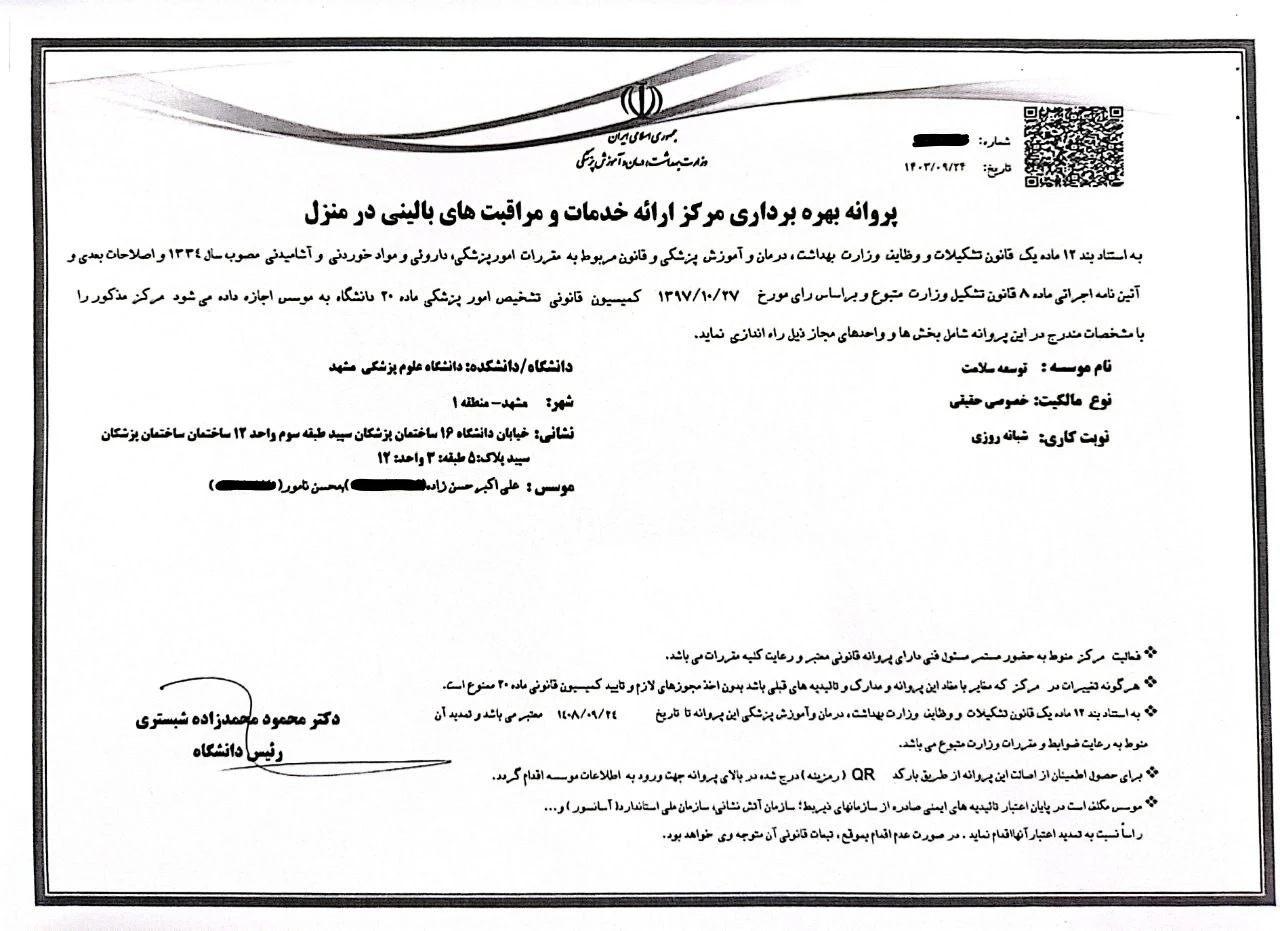
With trained carers, experienced nurses and a multidisciplinary care team, the Tose Salamat home clinical care centre provides elderly care at home in Mashhad tailored to each person. If needed, we can also arrange a doctor’s visit, nursing care, physiotherapy, lab tests at home, portable X-ray and ultrasound, specialist wound dressing, injections, IV therapy and other services at the same time.
For advice and to arrange care, call Tose Salamat on +98 930 900 9159.