
Description
Physiotherapy at home in Mashhad
Movement is one of the most important factors in staying independent and enjoying a good quality of life. After a stroke, surgery, a fracture, a sports injury or a neurological or muscular illness, many people need a rehabilitation programme to return to everyday activities. Using therapeutic exercise, specialist techniques and teaching correct movement, physiotherapy helps reduce pain, build muscle strength, improve balance and restore normal function.
For some patients, regular trips to a clinic are difficult or even impossible. Older people, patients confined to bed, people with limited mobility and those recovering from surgery can receive physiotherapy at home on their doctor’s advice. Treatment at home means exercises can be designed around the patient’s real living conditions, and the family can take part in rehabilitation.
What is physiotherapy?
Physiotherapy is a branch of rehabilitation science that aims to reduce pain, increase range of movement, strengthen muscles, improve balance and restore normal function.
After assessing the patient, the physiotherapist designs a personal treatment plan that may include:
- Therapeutic exercise
- Manual therapy
- Stretching
- Balance exercises
- Gait training
- Strengthening exercises
- Posture education
- Some portable treatment equipment when needed
The main aim is to increase the patient’s independence and improve quality of life.
Who needs physiotherapy at home?
Stroke patients
After a stroke, patients may have muscle weakness, balance problems or reduced ability to move. Early, regular rehabilitation can improve movement and independence.
Older people
With age, muscle strength falls and balance problems and falls become more likely. Physiotherapy helps older people stay mobile, reduces the risk of falls and increases independence.
Patients after surgery
After operations such as knee or hip replacement or some spinal surgery, rehabilitation plays an important part in returning to daily activities.
People with back and neck pain
Many musculoskeletal pains can be controlled with suitable exercise, correction of movement patterns and physiotherapy treatments.
Patients with neurological conditions
People with Parkinson’s disease, spinal cord injury or other neurological conditions may need regular physiotherapy to maintain movement and reduce physical limitations.
Patients confined to bed at home
Patients confined to bed for a long time are at risk of muscle weakness, stiff joints and reduced mobility. Physiotherapy programmes can help prevent these complications.
Advantages of physiotherapy at home
For the right patients, physiotherapy at home has many advantages:
- No need for repeated trips
- Less tiring for the patient
- The real living environment can be assessed
- The family learns how to continue the exercises
- Exercises are designed around the home
- Greater patient involvement in treatment
- Suitable for older people and patients with limited mobility
An important advantage is that the physiotherapist can assess and correct walking, using stairs, getting out of bed or a chair and other daily activities in the real environment — which can make rehabilitation more effective.
Steps of physiotherapy at home
Every patient is different, so the physiotherapy programme must be designed after a full assessment; it is not the same for everyone.
A home physiotherapy session usually includes the following steps:
1. Initial assessment
In the first session the physiotherapist assesses:
- Pain level
- Joint range of movement
- Muscle strength
- Balance
- Walking pattern
- Ability to carry out daily activities
- Medical and surgical history
- Current medicines
Treatment goals are set based on this assessment.
2. Treatment plan
After the assessment, a plan suited to the patient’s condition is designed. It may include:
- Stretching
- Strengthening exercises
- Balance exercises
- Gait training
- Training transfers from bed to chair
- Breathing exercises
- Manual therapy
- Physiotherapy equipment
3. Treatment sessions
The number of sessions depends on the condition, the severity of the injury, the patient’s age and the response to treatment.
In each session the physiotherapist reviews the patient’s condition and adjusts the plan if needed.
4. Education for the patient and family
One of the most important parts of treatment is teaching the patient and family. This may include:
- How to get out of bed correctly
- Walking safely
- Using a walker or cane
- Doing home exercises
- Preventing falls
- Sitting and lying in the right position
Equipment that can be used for physiotherapy at home
Today many physiotherapy devices are portable and, depending on the patient’s needs, may be used at home.
TENS
By electrically stimulating nerves, TENS can help reduce some muscle and joint pain.
IFT (interferential therapy)
Used in some patients to reduce pain and help muscle function.
Therapeutic ultrasound
In some muscle, tendon or soft-tissue injuries it may be used as part of the treatment, as decided by the physiotherapist.
Laser therapy
In some conditions, laser therapy can help reduce pain and support tissue repair.
Therapeutic exercise
The most important part of physiotherapy is therapeutic exercise; in many cases, treatment success depends more on correct, regular exercise than on any machine.
Physiotherapy after stroke
A stroke can cause weakness or paralysis on one side of the body, balance problems, difficulty walking and loss of independence.
The goals of physiotherapy for these patients are to:
- Increase muscle strength
- Improve balance
- Relearn walking
- Prevent stiff joints
- Reduce spasticity
- Increase independence in daily activities
Starting rehabilitation early, with the doctor’s approval, can play an important part in recovery.
Physiotherapy after joint replacement
After knee or hip replacement, the right exercises are essential for regaining range of movement and muscle strength. Treatment may include:
- Range-of-movement exercises
- Strengthening the muscles around the joint
- Gait training
- Learning to use a walker or cane
- Balance exercises
Physiotherapy for back pain
Back pain is one of the most common reasons people seek treatment. In many cases physiotherapy can help reduce pain and improve function through:
- Posture education
- Core strengthening
- Correcting movement patterns
- Stretching
- Manual therapy
However, warning signs such as severe leg weakness, loss of bladder control or pain after a serious injury need urgent medical assessment.
Physiotherapy for neck pain
For some people with neck pain, suitable exercise and posture correction can reduce pain and increase range of movement. Treatment may include:
- Stretching
- Strengthening the neck muscles
- Correcting sitting posture
- Ergonomics advice
- Manual therapy
Physiotherapy for the knee
People with knee osteoarthritis, ligament injuries or recovering from surgery may benefit from physiotherapy. The goals are to:
- Reduce pain
- Increase range of movement
- Strengthen the thigh muscles
- Improve balance
- Improve walking
The family’s role in successful treatment
An important advantage of home physiotherapy is that family members are involved. The family can help rehabilitation succeed by:
- Encouraging the patient to exercise
- Creating a safe environment
- Helping with correct movements
- Preventing falls
- Following the treatment plan
Common patient mistakes
Some habits can slow treatment down:
- Exercising irregularly
- Long periods of rest without a medical reason
- Heavy movements without asking the physiotherapist
- Stopping treatment as soon as the pain eases
- Using physiotherapy devices without guidance
- Ignoring home exercises
Myths about physiotherapy
“Physiotherapy is only for older people.”
No. People of all ages — from children to athletes and older people — may need physiotherapy.
“A few sessions will fix the problem completely.”
The number of sessions depends on the condition, the severity of the injury, the patient’s general health and how much they cooperate.
“The more it hurts during exercise, the better the treatment works.”
No. Some exercises may cause slight discomfort, but severe or increasing pain should be reported to the physiotherapist so the plan can be adjusted if needed.
When should you see a doctor before starting physiotherapy?
Although physiotherapy helps many patients, in some situations the cause of the symptoms should first be checked by a doctor. Get a medical assessment before starting exercises if there is:
- Severe, sudden pain after a fall or accident
- A possible fracture or dislocation
- Fever with joint or muscle pain
- Sudden weakness in an arm or leg
- Loss of bladder or bowel control with back pain
- Severe chest pain or shortness of breath
- Reduced consciousness
- Severe swelling, redness or unusual warmth of a limb
In these situations, finding the underlying cause matters more than starting exercises straight away.
How to get better results from physiotherapy
Success does not depend on the sessions alone; the cooperation of the patient and family plays a very important part. To get the most from treatment:
- Do your prescribed exercises as planned.
- Do not stop sessions without a good reason.
- Tell the physiotherapist about any unusual pain or change in symptoms.
- Avoid heavy movements without advice.
- Take good nutrition and enough sleep seriously.
- If you use a cane, walker or other aid, follow the instructions you were given.
Checklist before the physiotherapist arrives
To get the most out of the session, it helps to have ready:
☐ The doctor’s prescription or request (if any)
☐ Medical records and previous imaging such as MRI or X-rays
☐ Comfortable clothes suitable for exercise
☐ Enough space to move and exercise
☐ A sturdy chair or suitable bed (if needed)
☐ A list of current medicines
☐ Walking aids such as a cane or walker (if you use them)
Frequently asked questions
Is physiotherapy at home as effective as going to a clinic?
For many patients — especially older people, patients confined to bed and people with limited mobility — physiotherapy at home can be very effective. As well as treating, the physiotherapist can assess the patient’s real living environment and teach exercises suited to the home.
How long does each session last?
It depends on the condition, the treatment plan and the patient’s situation, but usually 45 to 60 minutes.
How many sessions are needed?
The number of sessions depends on factors such as the condition, severity of the injury, age, the treatment goal and the patient’s cooperation, and is decided by the physiotherapist.
Are physiotherapy machines enough on their own?
No. Machines are only part of treatment. In many cases therapeutic exercise, learning correct movement and the patient’s active involvement matter more for recovery.
Can older people have physiotherapy at home?
Yes. Many older people receive physiotherapy at home because of mobility problems, osteoarthritis, stroke or poor balance.
The role of physiotherapy in prevention
Physiotherapy is not only for treatment; in many cases it can also prevent new problems. For example:
- Reducing the risk of falls in older people
- Preventing stiff joints in patients confined to bed
- Correcting posture in people who sit at a desk for long hours
- Teaching correct movements for lifting
- Reducing the chance that some musculoskeletal pain comes back
Summary
Physiotherapy is one of the most effective forms of rehabilitation for restoring movement, reducing pain and increasing independence. It plays an important part in neurological and orthopaedic conditions, muscle problems, recovery after surgery and many other situations.
Physiotherapy at home — especially for older people, patients confined to bed and those who cannot easily get to clinics — allows rehabilitation in a calm, safe setting suited to the patient’s life. Success depends on a correct assessment, a scientific plan, the patient’s cooperation and regular sessions.
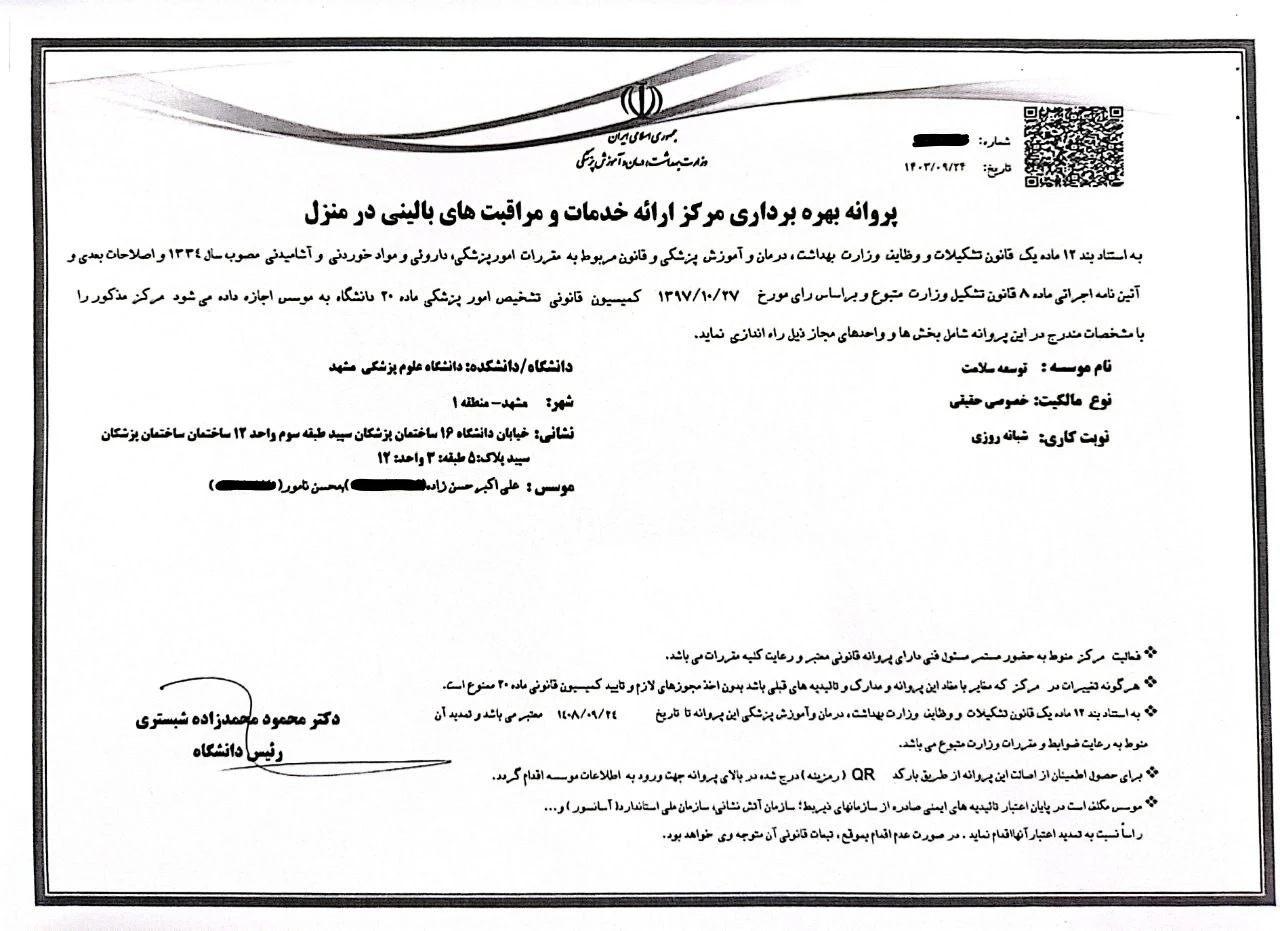
The Tose Salamat home clinical care centre, with experienced physiotherapists and advanced portable physiotherapy equipment, provides physiotherapy at home in Mashhad for stroke patients, older people, patients after surgery and people with osteoarthritis, back pain, neck pain, sports injuries and other musculoskeletal problems. If needed, we can also arrange a doctor’s visit, nursing care, intensive care, lab tests at home, portable X-ray, ultrasound, specialist wound dressing and other services at the same time.
For advice and to arrange services, call Tose Salamat on +98 930 900 9159.